Posts

Showing posts with the label Theology

Pope's theological seminar on hermeneutic of continuity

The Holy Father has continued the custom that he maintained as a Cardinal, of meeting each summer with his former students of theology at Tübingen and Regensburg. Since he has become Pope, the meetings have been held at Castel Gandolfo. This year, the theme is the hermeneutics (or interpretation) of the Second Vatican Council. The video above has a clip of the Holy Father giving his speech to the Roman Curia in December 2005. That speech was the inspiration for this blog.
"Beauty for Truth's Sake"

Image
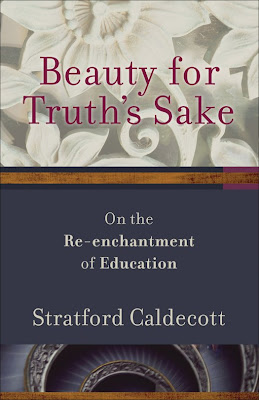
Stratford Caldecott has excelled himself in his latest book " Beauty for Truth's Sake. On the Re-enchantment of Education. " (Brazos Press, Michigan) It is quite concise at 156 pages but ambitious in attempting to sketch out a manifesto for overcoming the fragmentary and fractured nature of modern education, split up into disciplines or subjects from which people choose - according to their enthusiasm, or a passing whim very often. Caldecott invites us to return to the wisdom of the ancients but takes us further than the customary terminus a quo , pointing out that "before Socrates there was Pythagoras." Since the fragmentation of education is a denial of ultimate meaning, we need to be "re-enchanted" by having our eyes opened to the meaning and beauty of the cosmos. We have gained great power over created things but we have lost our confidence in the ability of the human mind to know the truth and to understand what it is that we control. The chapter ...

Prudence and the Theology of the Body

Image
A good dose of sound commonsense and orthodox moral theology come via Fr Maurizio Faggioni OFM, a professor at the Pontifical Academy “ Alphonsianum ” which specialises in moral theology. In a recent interview with Catholic News Agency ( Renowned moral theologian weighs-in on Theology of the Body debate ), Fr Faggioni addressed some of the issues that have been strongly criticised in Christopher West's presentation of the Theology of the Body. He warned that: “it is simply not true that the traditional Catholic moral supports the use of acts that Thomas Aquinas call contra naturam -against nature- (such as anal sex) as something ordinary.” The distinction iuxta naturam (in accord with nature) and contra naturam (against nature) is a crucial one on moral theology and needs to be more widely known. Fr Faggioni said: “the traditional moral theology certainly does not prohibit intimacy among spouses, but it never regards them as a substitute for the marital embrace and accepts intim...

Chalcedon, Oxford, Blackfen

Image
After Mass this morning, I motored down to Cowfold to talk to the Carthusians about the Monophysite heresy and the Council of Chalcedon. With the various expressions for person and nature being rather confused, it was a triumph of Pope St Leo to provide the basis for a formula of faith that preserved the best of both the Antiochene and the Alexandrian schools, proclaiming for all time that the Incarnate Word is one person in two natures, divine and human. Here is the magnificent statement of the Fathers of Chalcedon: Therefore, following the holy fathers, we all teach that with one accord we confess one and the same Son, our Lord Jesus Christ, the same perfect in human nature, truly God and the same with a rational soul and a body truly man, consubstantial with the Father according to divinity, and consubstantial with us according to human nature, like unto us in all things except sin, [cf. Heb. 4:15]; indeed born of the Father before the ages according to divine nature, but in the las...

"On Rupture Theology"

K Gurries who writes the Opuscula blog, has an interesting article On Rupture Theology , discussing the hermeneutic of discontinuity and rupture with useful quotations from Journet. One controverted question is whether a Pope could fall into heresy. Fisheaters has the relevant passage from Bellarmine's De Romano Pontifice , and an article by Michael Davies discusses the question (" A Heretical Pope? "), concluding that "there is no case whatsoever for claiming that any of the conciliar popes have lost their office as a result of heresy".

Theology of the Body Symposium, Maynooth

Image
I am happy to pass on news of this Symposium to be held in Ireland in June : Man and Woman He Created Them: Pope John Paul II's Theology of the Body The 2nd International Symposium 11th-14th June, 2009 Maynooth Campus, Maynooth, Ireland This Symposium, marking the 30th anniversary of both Pope John Paul II's visit to Ireland and the first Papal audience on the Theology of The Body, will explore the goodness, truth and beauty of human sexuality and the Divine plan for human love. Scholars, teachers, students and catechists from around the world will come together to discuss and unfold the Catholic Church's theology of the body. It is hoped that the Symposium will also provide an opportunity for a deepening of personal faith and self-understanding that will no doubt inspire for many a new enthusiasm to engage in the New Evangelization. The Symposium features internationally renowned speakers such as DDr. Michael Waldstein, Sister Mary Timothy Prokes, FSE, Dr. Mary Shivanandan...

Theology of the Body Lecture

Vicki Thorn, founder of Project Rachel in the USA will be giving the annual Westminster Diocese: Theology of the Body lecture (organised by the Department of Pastoral Affairs, Westminster) on May 12th 7pm in Westminster Cathedral Hall. Vicki will be making a presentation based on her illuminating research in to the human body and endocrine system; (why man and woman fall in love and bond and how human physiology is ordained by God to work correctly!) her renowned talk: Biology of the Theology of the Body makes ideal material for parents, teachers and anyone interested in authentic sexuality. Please spread the word and contact Edmund Adamus for more info.

Theology of the Body Conference

Image
Robert Colquhoun, who writes the Love Undefiled blog, has sent me details of a Theology of the Body Conference to be held on Saturday 6 June 2009 from 10am to 4pm at Vaughan House, 46 Francis Street, London, behind Westminster Cathedral. Here is the text: This is a day conference of six fascinating talks covering the essentials of the theology of the body. The contemporary relevance of Pope John Paul’s catechesis on life and love will be discussed. A special emphasis will be placed on promoting this teaching in today’s society . Guest Speakers : Joanna Bogle — Marriage & the Church Rev William Wright OSB - Eros and Agape Damian Polly - Resurrection of Body and Celibacy Matthew Nichols - Purity of the heart & Life in the Spirit Robert Colquhoun - Male and Female he created them Any questions or to reserve a place (first come, first served) Contact : Robert Colquhoun Suggested donation for the day: £10.

There never was when he was not

Image
Just briefly touching down after lecturing at Parkminster today and before going on to an appointment in London with an old friend. Today we reached Arius in the course on the Trinity. It is quite fascinating to see the various attempts made by fathers, ecclesiastical writers and heretics, to address the problem of how there can be only one God and yet there can also be Jesus Christ and the Holy Spirit. Tertullian came up with the term "Trinitas" and there were various more or less successful attempts to say how the Son or the Word could be distinct from the Father and yet be God. Some thought that the Son was an emanation from the Father, perhaps a secondary God, or that he was God and therefore the same as the Father, so that the Father also suffered on the Cross. Others said that he was like a ray from the light source, that he was God in a sense but not the true God. Arius said that he was created, not eternally begotten, and that he was of a different kind of thing from ...

Biblia Clerus

Over the past few years, the Congregation for the Clergy has quietly worked to make available a large collection of texts . It is possible to obtain a CD with these texts on or to download the whole collection to your hard drive. The collection is updated from time to time and there is a tool to update the collection on your hard drive. The collection includes the bible, commentaries from the Fathers, various other patristic and spiritual texts, and various catechisms including the Catechism of the Catholic Church, the Catechism of the Council of Trent, the Catechism of St Pius X and the Baltimore Catechism. The Liturgical section has the Missal of 2002 and the Missal of 1957. These are useful since although the old Missal is available on pdf, this version is a little easier to navigate through and the text a little easier to grab. With the bible, there is a good tool provided in the "comment" button which changes the sidebar to give links from a chosen section to various pat...

Immaculata Conceptio blog

Have a look at Fr George's Immaculata Conceptio blog. Fr Geoprge is a permanent chaplain in the Sanctuaries of Our Lady of Lourdes in France and his blog is especially devoted to an "in-your-face historical critical scientific exegesis of Genesis 2,4–3,24" and other scriptural texts relating to the Immaculate Conception. Fr George is highly competent in ancient languages and exegesis so do go over to see his contribution to this fascinating area of study.

Launch of "Usus Antiquior"

Image
Yesterday was a full day - 9am Novus Ordo, 10.30am Missa Cantata, two Baptisms, then on to Vespers and Benediction at the London Oratory, followed by the launch of the journal Usus Antiquior (and then on to Wonersh to be ready to lecture this morning). Above you can see Fr Z's photo from the sanctuary during the preparation for Benediction. the Liturgy of the Oratory is still, in Faber's words describing the Traditional High Mass of the Roman Rite, "The most beautiful thing this side of heaven" and I never fail to be moved by it. When I was young, I used to attend occasionally. In those days, I did not know the Fathers of the Oratory. Now I know many of them and count them as good friends - but in the Liturgy, their personality is subsumed into the sacred action and it scarcely matters which of the Fathers are acting as Sacred Ministers. It is so emphatically not about "me the celebrant" but the humble and awe-filled worship of Almighty God. After Vespers, ...

Bl John Duns Scotus conference

Image
This week the International Symposium on the Mariology of Blessed John Duns Scotus is taking place at Grey College, Durham. Tomorrow morning, I will be giving a paper summarising the development of the theology of the Immaculate Conception and the celebration of the feast between the time of Scotus and the definition. From previous experience, I know that these conference are quite high-powered academically with many genuinely learned theologians present. The Franciscans of the Immaculate take their vows of poverty and obedience very seriously - as they do their theology. In such company, I'm rather nervous about my paper... Today, the participants, including among them many Franciscan friars and sisters of the Immaculate, went to visit the chapel at Duns and were warmly welcomed by Cardinal O'Brien who celebrated Mass for them and spent the whole afternoon with the group. I hope to have some pictures of this event soon from Claudio who showed me some on his camera over supper....

US Bishops on Pelosi

Nancy Pelosi, the Speaker of the House of Representatives of the United States of America, recently made a statement dredging up the usual old nonsense about how some theologians 500 years ago did not know about the development of the unborn child and therefore speculated on the time at which the soul was infused. This, of course, has nothing to do with the morality of abortion since all the said theologians were resolutely against abortion at any stage. Thankfully, many US Bishops have stepped into the fray and issued statements correcting Speaker Pelosi. This has caused her some embarrassment in the mainstream media who will at least recognise that perhaps the Bishops know a little more about medieval theologians than she does. See Diane at Te Deum Laudamus for a roundup of statements from the US Bishops . The silly argument about St Thomas Aquinas and ensoulment was used in tghe course of the debatge on the HFE bill last May and is still trotted out on occasion. The US Bishiops have...

Credo of the People of God "written by Maritain"

Sandro Magister has a fascinating story concerning the Credo of the People of God issued by Pope Paul VI in 1968. (Cf. The Credo of Paul VI. Who Wrote It, and Why ) Between Maritain, the great theologian Charles Journet and Pope Paul VI, the text arose, principally written by Maritain, according to an article by Cardinal Cottier in Trenta Giorni . I well remember the little red CTS copy of the Credo of the People of God . Fr Nesbitt handed copies round to us at school and I read it avidly as a teenager when the faith was being attacked all around in modernist sermons, the destruction of catechetics - yes, and the collapse of the Liturgy. The Credo of the People of God was one of those anchors by which ordinary Catholics could assure themselves that the faith of the Church had not changed, and that we still believed what the Fathers believed. Here is a link to the text of the Credo of the People of God . H/T Fr Z

Christ - an excuse to talk about something else

Sandro Magister had a good article the other day entitled: Antichrist Alert! Cardinal Biffi Rouses the Church . H refers to a new work published by Cardinal Biffi, "Pinocchio, Peppone, the Antichrist, and other Meanderings." Biffi looks at the confused religious identity of our times with its emphasis on openness, its obsession with "dialogue" at all costs, where little remains of the unique and incomparable person of the Son of God who was crucified for us, rose from the dead, and is now alive. It is the situation that Fr. Divo Barsotti denounced in an extraordinary, and extraordinarily true, statement, when he said that in the Catholic world of our time, Jesus Christ is too often simply an excuse to talk about something else."

Peter Lombard project

Image
I have just found this site devoted to Peter Lombard which will be very useful to students. It has links to biographies, articles and texts of commentaries on the Sentences. There is also a project in progress to provide and online translation of the Sentences into English with the Latin text in parallel. In the picture above, the seven Liberal Arts move a Sacred Theology chariot along at the urging of Peter Lombard, the Magister Sentenciarum .

The positive via negativa

At Parkminster today, I was continuing with the tract De Deo Uno . We were considering the ways in which we can, in this life, know God. In particular we looked at the Summa Theologica Prima Pars , question 13 on the names of God. In this section, we considered the various ways in which we can, in this life reach towards the essence of God, even though (in this life) we cannot attain any intuitive vision of the essence of God. There are: 1. The way of affirmation by which we predicate certain attributes of God – that he is good, almighty etc. 2. The way of negation by which all limitations and imperfections are excluded from God. For example, God is not mortal, God is infinite etc. (Some of the Fathers also negated such things as goodness of God because our idea of goodness is limited.) 3. The way of eminence by which we explicitly assert the superabundant divine perfection above anything that the created mind can conceive. When looking at Lateran IV 's condemnation of the Abbot ...

Bishops and priests and a bad translation

Fr Sean Finnegan has an excellent post about the theology of the episcopate: Crossword Clue . I would like to make an observation with regard to the rite of ordination of a priest. The essential form of ordination for priests and deacons is almost exactly the same as the form in the old Roman Pontifical. (The form for Bishops has been changed to be based on the Apostolic Tradition - thought at the time of Vatican II to be by Hippolytus.) So the Latin text for the form of ordination of a priest is as follows: Da, quaesumus, omnipotens Pater, his famulis tuis Presbyterii dignitatem; innova in visceribus eorum Spiritum sanctitatis; acceptum a te, Deus, secundi meriti munus obtineant , censuramque morum exemplo suae conversationis insinuent.” The English translation currently in use is: Almighty Father, grant to these servants of yours the dignity of the priesthood. Renew within them the Spirit of holiness. As co-workers with the order of bishops may they be faithful to the ministry that ...

Migne gradually coming online

Image
The Wikipedia article on the Abbé Jacques Paul Migne says, Migne had become convinced of the power of the press and the sheer value of raw information widely distributed. One can imagine how much he would have contributed to the internet! His most famous publications were the Patrologia Latina and the Patrolgia Graeca; enormous collections of patristic texts in whatever were the best editions available to him at the time, have not been surpassed in comprehensiveness although over the years, many of the works of the Fathers have been published in better critical editions. Migne is still the standard for citation of the Fathers. I have spent many happy hours at Wonersh and in Rome, retrieving a volume from the shelves and finding the column number and checking up a reference or reading around to establish the context of a popular quotation. The articles at the beginning of many of the volumes are outstanding studies in their own right. Private firms have for some time offered Migne for ...

Popular posts from this blog

Is your alb back to front?

Saint Gabriel

Litany of Syrian Saints

1962 Missal pdf online

Assent and papal magisterium