Saturday, July 11, 2009

Anniversary of Baptism

Thinking of anniversaries, I have only just noticed (shame on me!) that today is the anniversary of my Baptism. The Church offers us a plenary indulgence if, at the Easter Vigil or on the anniversary of our baptism, we renew the promises made on our behalf. Off to do that now ...

The joy of following Christ

Here is the sermon that I preached last night at Addiscombe. The Mass was a Votive Mass of Christ the High Priest offered for the particular intention of praying for vocations to the priesthood.


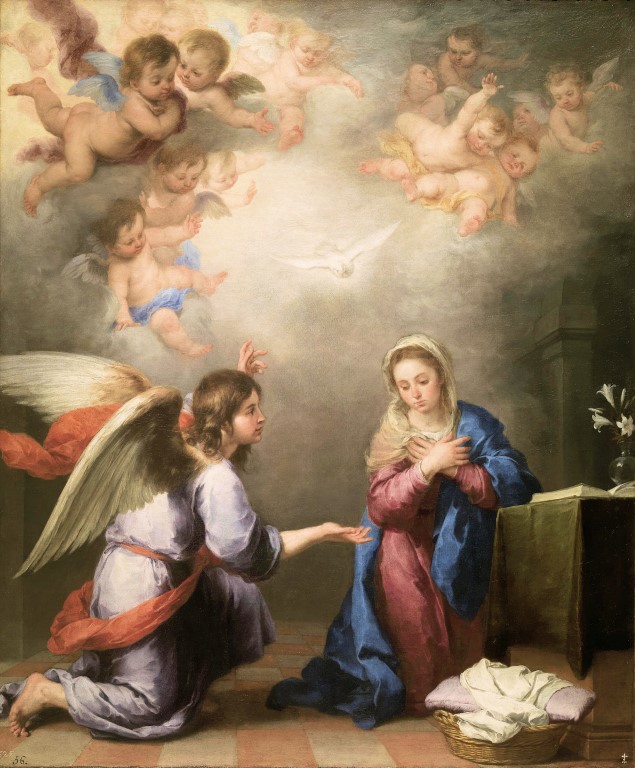
I am deeply grateful to Fr Joe O’Connor and to you, the parishioners of Our Lady of the Annunciation, Addiscombe, for inviting me to celebrate Holy Mass here on the occasion of my 25th anniversary of priestly ordination.

My very first memories of the Holy Mass are of being carried in my father’s arms at the age of perhaps 3 or 4, listening to the singing of the Credo in the old Church in Brockenhurst Road. In this new Church, I remember regularly coming to confession to Fr McKenna. He always seemed to me very grave but kindly. Mgr Moran was the parish priest at the time of my ordination in 1984 and, as I realise now, as a wizened parish priest myself, greatly cherished the opportunity to have a priestly ordination in the parish. Later, I participated in the funeral of my brother, Gerry, and celebrated the funeral of my own mother and father.

It was in this very Church that I received that call from God, indefinable, uncommunicable but unmistakeable, challenging me to throw over any prospects of a career in the world and instead to take up his call “Follow me!” The example of many good priests helped me, but especially that of Fr Roger Nesbitt who taught at the John Fisher School and who also came here to supply for a Mass regularly on Sunday. Some years later, I was ordained by Bishop John Jukes and celebrated my first Mass at the altar where we celebrate Mass this evening.

Now after 25 years, I feel that along with the various celebrations, I should make an act of contrition. No priest can feel satisfied with the work he has done. We are given responsibility by Our Lord for the salvation of others and we fail. We are asked by Him to celebrate the sacred mysteries worthily and we fail. We are asked to draw close to Him as His intimate friends but we fail. Therefore we take consolation from the gospel that He did not come to call the virtuous but sinners and that He favoured the prayer of the publican who went to the back of the temple and prayed “Lord, be merciful to me, a sinner.”

The Holy Mass helps us priests to be aware of this. We come to the altar as men who are not worthy, trembling in the presence of the Lord who nevertheless deigns to come among us to give us life. His generosity to His people is the spur that makes us, again and again, go up to the altar of God.

Pope Benedict has spoken this week of the impact of the gospel in social affairs in his magnificent but quite challenging encyclical “Caritas in veritate.” He offers wise teaching on the ordering of social affairs, development, globalisation and the centrality of the human person. His genius is to make this teaching part of the seamless garment which is the teaching of the Catholic Church. Our charitable work and our celebration of the Sacred Liturgy are not at odds with each other, they are intimately and necessarily linked because the proper ordering of society is only possible when we recognise and live the life to which God has called us.

The vocation of the secular priest is to be at the heart of this inter-relationship between the human and the divine, the sacred and the profane, the Church and the world. In his letter proclaiming the Year of the Priest, the Holy Father pointed out how the spiritual life of the Curé of Ars, centred on the real presence of Our Lord in the Blessed Eucharist, and his ministry at the altar, in the pulpit and in the confessional, flowered also in his care of the sick and his commitment to the education of the poor. These things flowed from his love of the sacred mysteries. Although he was frugal in his personal life, wearing a threadbare cassock and eating mouldy potatoes, he would spare no expense to decorate his Church, to provide fine vestments, and particularly, to ensure that the Blessed Sacrament was housed in a worthy tabernacle.

Our prayer for vocations should be a prayer filled with hope and trust. Our Lord will provide labourers for his harvest if we pray earnestly to Him. We must not despair: in every age there will be young people willing to give their lives for the love of Christ but we must first teach them how loveable Our Lord is, how thrilling it is to follow him wholeheartedly, and how he is never outdone in generosity. Whatever we think in our conceit that we give to him he gives a hundredfold to us – not without persecutions – but always with the deepest consolation of His divine presence.

To God who gave joy to my youth

Last evening, at the kind invitation of the parish priest, Fr Joe O'Connor, I returned to the parish of Our Lady of the Annunciation in Addiscombe where I grew up. There are so many memories for me in that Church, both happy and sad. I attended my sister Sarah's baptism there, I celebrated my sister Mary's wedding, and I was myself ordained there. I recall the formative discipline of walking regularly along Bingham Road to Sunday Mass (and later, often, to daily Mass); but I also remember the sadness of my brother's funeral and the funerals of my parents which I celebrated in the same Church. Through all of this, God did indeed give joy to my youth as I grew in the knowledge and love of the Catholic faith.

Our Lady of the Annunciation was also the Church in which I celebrated my first Mass - with Fr Guy Nicholls as Assistant Priest - on Sunday 29 July 1984, before going over to Holy Innocents, Orpington to concelebrate at the ordination of my classmate Paul Hendricks who is now an Auxiliary Bishop in Southwark.

The parish is thriving and full of life and, as always on occasions like this, the generosity of parishioners was evident with many people co-operating to provide a warm reception in the Hall afterwards. It was so good to see old friends and catch up with news, as well as enjoying reminiscences particularly of my dear father who was quite a local figure since he was Headmaster of the junior school in West Croydon for 27 years and therefore knew and was known by generations of families. People often tell me that I have become ratehr like him and I am happy to accept that as a compliment.

An important clarification

On the Recife affair on which I wrote the other day (Recife case and Roman malaria) is published in today's edition of L'Osservatore Romano.

Thank heavens that the Congregation for the Doctrine of the Faith has affirmed that

"the doctrine of the Church on procured abortion has not changed and cannot change."
See Rorate Caeli's comments.

Friday, July 10, 2009

Holy Communion and Prime Ministers

Last week saw the funeral of Romeo LeBlanc, a politician and statesman who served as Governor General of Canada until 1999, and who died of Alzheimer's disease on 24 June. The Canadian Prime Minister Stephen Harper attended his funeral. First of all, let me encourage you to offer a prayer for the repose of the soul of Romeo LeBlanc, and a prayer for the Prime Minister in thanksgiving for his being good enough to participate in the funeral.

Unfortunately, the funeral has been overshadowed by controversy as shown in this clip:


The Prime Minister (a Protestant) is in the front row as Archbishop Andre Richard (Moncton, New Brunswick) administers Holy Communion (note to editors - this is not "the wafer" etc. Please show some respect for our "religious sensibilities.") He receives Holy Communion into one hand, rather as if he is accepting a little souvenir token. Given the way that Holy Communion is often distributed today, that is not an unreasonable interpretation of the visible rite for someone who is not of the household of the faith.

Rumours began that Harper had put the sacred host in his pocket but this was denied by his officials who said that he had consumed the host and I think it is reasonable to trust this account. Nevertheless, the incident raises some important questions for the Church as a whole.

First, the decision to receive Holy Communion should be just that - a decision. Holy Communion should not be administered in such a way that people have to "opt out" by folding their arms across their chest and asking for a blessing or whatever. It is a matter for discussion whether people should be invited to come up and ask for a blessing but the priest (or Bishop) should not walk along a row of people at a funeral where there will usually be various people of good will who turn up to show their respects. Catholics also should examine their conscience and consider "Should I receive Holy Communion today? Am I properly disposed (and free from any unconfessed mortal sin)? Have I kept the fast? Have I prepared spiritually?

We need to get away from the idea that participation at Holy Mass necessarily involves receiving Holy Communion. It is quite proper sometimes to participate at Mass and make a spiritual communion if we do not, at the moment, have the correct dispositions. This is not "Jansenism" but simply a proper attitude to the Blessed Sacrament.

Secondly, there needs to be some advice on protocol when high-profile public figures attend Mass on a major public occasion. Although I feel a little sorry for Prime Minister Harper who has unintentionally become embroiled in a public outcry whilst sincerely carrying out a corporal work of mercy, it is surely fair to point out that the officials who have defended him could have done some homework. So here are some pointers for officials attending Mass:

1. You may join in with the prayers as you wish, according to your conscience, or you may simply be present with your own thoughts and goodwill. We respect and value your presence for the occasion.
2. If you are not a practising Catholic, in a state of grace, and fasting for one hour beforehand, you should not receive Holy Communion. If you are mistakenly offered Holy Communion, it is perfectly proper to refuse and say "Please may I have a blessing" or, if you do not wish to receive a blessing, simply to say "I am not receiving "Holy Communion."
3. If you have voted for policies contrary to important teachings of the Catholic Church, (the liberalisation of abortion, for example) it would be proper to observe the advice in #2.
4. This guidance is offered in charity because failure to observe these points will possibly result in negative publicity which will undermine the quite proper positive public impact of your attendance.
For priests (and bishops) at funerals, it is important to remember the conscience of those attending. Some people may not wish to come up for a blessing but prefer to remain where they are, with their own thoughts and prayers. If you give a blessing to people at Holy Communion (I do this but am aware that the matter is under study at the CDW) then this should be something that people choose to do, not something imposed upon them. And certainly it is imprudent to go along a row of people with the ciborium leaving them to make the decision there and then.

Putting things in context

I love the way that the "Udienze" section of the Bolletino is structured today:

LE UDIENZE , 10.07.2009


LE UDIENZE

Il Santo Padre ha ricevuto questa mattina in Udienza:

S.E. il Signor Héctor Federico Ling Altamirano, Ambasciatore del Messico presso la Santa Sede, in occasione della presentazione delle Lettere Credenziali;

Em.mo Card. Giovanni Battista Re, Prefetto della Congregazione per i Vescovi;

Em.mo Card. Agostino Vallini, Vicario Generale di Sua Santità per la Diocesi di Roma.

Il Papa riceve questa mattina in Udienza:

S.E. Mons. Albert Malcolm Ranjith Patabendige Don, Arcivescovo di Colombo (Sri Lanka).

Il Santo Padre riceve questo pomeriggio in Udienza:

S.E. il Signor Barack Obama, Presidente degli Stati Uniti d’America, con la Consorte, e Seguito.

[01108-01.01]

A magnificent encyclical in a great tradition

The Holy Father’s new encyclical Caritas in Veritate is typical of his writing generally. Each individual sentence is perfectly lucid and yet taken as a whole it is a dense read, demanding full attention and often requiring the reader to go back again to take in the full impact of the powerful ideas expounded. My personal reaction after finishing it was that this is a superb exposition of the Church’s social teaching, tailored expertly to our present time. As well as being magisterial in the theological sense, it is a fine example of the work of our “papa professore”.

Beginning in a way that reflects the best quality of the Holy Father’s German academic background, an orderly and logical approach to complex topics, the introduction offers an exposition of the mutual relationship between charity and truth, explaining that truth must be sought and expressed within the “economy” of charity but that charity in its turn must be “understood, confirmed and practised in the light of truth” (n.2) because without truth, charity is an empty shell. A key principle is the nature of love itself which, almost in passing, Pope Benedict reminds us, is to desire the good of the other (n.7)

On this basis, the encyclical proceeds, considering first of all Paul VI’s Populorum Progressio in the light of the hermeneutic of continuity. Importantly, Pope Benedict reminds us that the Church’s public presence cannot be limited to charitable activities; a limitation that is a significant danger in secular legislation and a danger also in Catholic schools and parishes where it can sometimes seem as though the only worthwhile activity is raising money for one or other charity. Worthy as these activities are, they must not derail the Church’s missionary mandate.

The encyclical does not shy away from the question of financial activity, placing this too within the context of mutual relationship in society, decrying the purely speculative approach to the market and calling for a “new humanistic synthesis” in the face of globalisation – which is, after all, simply an aspect of relationships between human persons made inevitable by increased communication. For those of us interested in the opportunities presented by the internet, the passing remark criticising the “unduly rigid assertion of the right to intellectual property” (n.22) applies not only to the field of health care which the Holy Father mentions, but also within the Church to the accessibility of liturgical texts.

Another crucial principal that Pope Benedict underlines is that the primary capital to be safeguarded, when we are thinking of economic and social assets, is the human person in his or her integrity. Thus he lays considerable emphasis on the sanctity of human life, expertly drawing pro-life concerns into the question of development and starkly contradicting the common view that pro-life and development priorities are somehow opposed. For me, this is one of the highlights of the encyclical: it is perfectly proper for pro-lifers to pull out particular quotations since there are some fine points made, but it is also heartening to see the pro-life message presented positively within the context of the Church’s commitment to the common good, tackling poverty, and the development of peoples.

In the third chapter, on fraternity, economic development and civil society, Pope Benedict puts the doctrine of original sin firmly in its proper place as the root explanation for the evils we experience in society. As the antidote for this, he speaks at length on the “spirit of gift”, the genuine charity which is gratuitous, rather than driven by necessity. As a deepening of the spirit of philanthropy (which itself could surely be a lesson we could learn from some of the great Victorians) he courageously proposes that gratuitousness must find a place even within economic activity.

On human rights, the Holy Father again brings us back to a fundamental principle that rights presuppose duties (n.43). He emphasises the vital importance of the family and, when speaking on the duty that we have to enable a just distribution of resources related to energy, he goes further to speak on a theme that he has addressed before, the underlying demand to preserve the human ecology which is necessary itself if society is to be in a position to address the problems of the material ecology.

The chapter on the co-operation of the human family takes up and reinforces familiar themes in the tradition of Catholic social teaching, applying them to the present time. In addition to observations on the welfare state, trade unions and finance, the Holy Father also reflects on the more modern phenomenon of tourism, gently challenging us to consider the effects of our holidays on others, and on the duties of the “consumer”, again a consideration that is especially relevant for modern western society.

Considering technology in general, Pope Benedict warns against the “promethean presumption” that we can re-create ourselves through technology, and reprises his teaching on the means of social communication urging that these too should have the good of the human person at the heart of their activity, rather than taking refuge in a supposed moral neutrality which ultimately destroys social relationships.

It seems to me futile to attempt to analyse the encyclical in terms of “left” and “right” or to apportion elements of it to particular interests or political leanings. The Church’s social teaching has always offered the reflection of an “honest broker” who is not involved in party politics; and that is how it should be. Caritas in Veritate is a magnificent contribution to that venerable tradition, offering thoughtful, instructive, and challenging guidance on the problems that society faces today.

Thursday, July 09, 2009

Recife case and roman malaria

Sandro Magister has extracts from a most interesting article by Monsignor Michel Schooyans on the Recife Case. (See: The Recife Case. Rome Has Spoken, But the Dispute Has Not Ended) First, let's run through the story so far. Earlier this year, a nine year old girl from the city of Alagoinha (Diocese of Pesqueira in Brazil) was found to be pregnant with twins as a result of being repeatedly raped by her young stepfather. The case was made public on 25 February. The family arranged for the girl to travel to another city, Recife, to have an abortion. On 3 March, the day before the abortion was to take place, the Archbishop of Recife, José Cardoso Sobrinho (above), said that while the little girl could not be held accountable for the act, the penalty of excommunication under canon 1398 would apply to the doctor and to other adults who were complicit. (Cue: worldwide media outrage.)

In an interview with the Italian daily La Stampa a few days later, Cardinal Re (left), Prefect of the Congregation for Bishops, supported the Archbishop, saying "Life must always be protected, the attack on the Brazilian Church is unjustified." However, in an article on 15 March in L'Osservatore Romano, Archbishop Rino Fisichella (right), President of the Pontifical Academy for Life, attacked Archbishop Sobrinho, saying that the girl "should first of all have been defended, embraced, comforted", that it was all a very difficult decision, and, addressing her, "There are others who deserve excommunication and our forgiveness, not those who allowed you to live." The article implied that the case had become public because of Archbishop Sobrinho's statement about the canonical penalty.

Several senior priests from the Diocese of Recife responded immediately with a statement making various salient points, notably that the case had already become public before the Archbishop had issued his statement, that Fisichella had not contacted his brother Archbishop in advance of writing the article, and that the Church's teaching is quite clear on the matter. Most importantly, they repudiated the implication that the girl had not been afforded pastoral care. The section of the statement on this deserves to be quoted in full:

2. All of us - beginning with the parish priest of Alagoinha (undersigned) - treated the pregnant girl and her family with all charity and tenderness. The Parish priest, making use of his pastoral solicitude, when aware of the news in his residence, immediately went to the house of the family, in which he met the girl and lent her his support and presence, before the grave and difficult situation in which the girl found herself. And this attitude continued every day, from Alagoinha to Recife, where the sad event of the abortion of the two innocent [babies] took place. Therefore, it is quite evident and unequivocal that nobody thought in "excommunication" in the first place. We used all means at our disposal to avoid the abortion and thus save all THREE lives. The Parish priest personally joined the local Children's Council in all efforts which sought the welfare of the child and of her two children. In the hospital, in daily visits, he displayed attitudes of care and attention which made clear both to the child and to her mother that they were not alone, but that the Church, represented by the local Parish priest, assured them of the necessary assistance and of the certainty that all would be done for the welfare of the girl and to save her two children.

3. After the girl was transferred to a hospital of the city of Recife, we tried to use all legal means to avoid the abortion. The Church never displayed any omission in the hospital. The girl's parish priest made daily visits to the hospital, traveling from the city which is 230 km [140 mi] away from Recife, making every effort so that both the child and the mother felt the presence of Jesus the Good Shepherd, who seeks the sheep who need most attention. Therefore, the case was treated with all due care by the Church, and not 'sbrigativamente' [summarily], as the article says.
Clearly there is a major problem here, not only the fact that an Archbishop in a most difficult position, faced by a hostile anti-clerical press was put out to swing in the wind, but also the hazy approach to the morality of abortion from a senior Vatican official - in charge of the Pontifical Academy for Life.

Enter Monsignor Michel Schooyans (left), a member of three Pontifical Academies: the Academy of Social Sciences, the Academy of Saint Thomas Aquinas, and - more to the point - the Academy for Life. (In 1997, Cardinal Ratzinger wrote to the preface to his book "L'Évangile face au désordre mondial.") On 11 June, he wrote an article on "The Recife Affair", an English translation being published by LifeSite News (See: Complete Article on "The Recife Affair"). This is the article that Magister has picked up and commented upon with his trustworthy knowledge of Vatican affairs. Quite justifiably, Magister calls the article by Schooyans "a blistering indictment".

Schooyans analyses the various errors and misinterpretations in Fisichella's article, effectively expanding and developing several of the points made by the priests of Recife and adding others of his own. He goes on to point out the serious divisions in the Church that are highlighted by the affair. He asks why Fisichella took no notice of the statement by Cardinal Re, he criticises L'Osservatore for failing in its mandate by allowing through a text that is inaccurate and doctrinally dubious, and he expresses a number of serious concerns regarding the Pontifical Academy for Life.

He also asks three pertinent questions: Did the Fisichella article receive the prior approval of the Congregation for the Doctrine of the Faith? Was the article published with the approval of other Vatican authorities? (in particular the Secretariat of State); What is envisaged in terms of corrections to Fisichella's article?

Schooyans concludes his article as follows:
To recap, faced with the turbulence provoked by Fisichella’s article, there is, it appears, only one real solution: a strong statement from the Holy Father. Fisichella’s article has created a general doubt concerning the “legitimacy” of abortion. However, it is uncertain whether, in Rome, the gravity of the situation created is sufficiently perceived. Yet the doubt is now being passed on to the universal Church, reinforced by two factors: the senior position of the article’s author, and the unofficial nature of the periodical publishing it. If the Pope says nothing, the doubt will persist and we will see a repetition of what is happening today with "Humanae vitae" (1968)
This is all heady stuff and quite disconcerting for those of us slogging away at the coalface. It is apposite to recall the quotation from Newman which I posted a couple of weeks ago:
Now, the Rock of St. Peter on its summit enjoys a pure and serene atmosphere, but there is a great deal of Roman malaria at the foot of it.
Nevertheless, the malaria seems to be wafting up from the foothills to one or two higher staging points. We do need to pray for the Holy Father at this time. As I have mentioned before, St Vincent Ferrer taught that in the case of the Holy Father, prayer is not a general remedy as it might be for any other individual: it is an appeal to his immediate superior since he has no superior on earth.

The Holy Father needs our prayers because doubt has been created by the Fisichella article and it has the potential to cause damage throughout the Church. This is not simply a pro-life worry: speaking for "Catholics for Choice", Frances Kissling said that Fisichella
"has opened a crack, through which women, doctors and political decision-makers can slip in."
In the meantime, Mgr Ignacio Barrereiro and Raymond de Souza travelled to Brazil to present Bishop Sobrinho with the Von Galen award on behalf of Human Life International. The event was attended by 2000 well-wishers. Here is a link to a Special HLI Report and here is the YouTube video:

Newman and the hermeneutic of continuity

Just got to browsing through the articles in this week's Catholic Herald as the links have been going up on Twitter today. There is a good piece by Fr Ian Ker, the renowned Newman scholar, on how Newman can lead us out of our post-Vatican II turmoil. Only the other day, I posted one of my favourite "purple passages" from Newman which ends with the assertion "To be deep in history is to cease to be a Protestant." Fr Ker suggests:

He would say today with Pope Benedict: "To be deep in history is to cease to be a Vatican II liberal Catholic" - that is, the kind of Catholic who thinks that Vatican II represented a complete break in the history of the Church, a new dawn analogous to the Reformation as seen by Protestants.

Wednesday, July 08, 2009

Ecclesia Dei reshuffle

Today, Pope Benedict has issued a Motu Proprio Ecclesiae unitatem, restructuring the Pontifical Commission Ecclesia Dei.

In this Motu Proprio, the Holy Father observes that although he has freed up the use of the older form of the Roman rite and remitted the excommunications of the four Bishops ordained by Archbishop Lefevbre,

The doctrinal questions, however, obviously remain, and, until they are not clarified, the Fraternity does not have a canonical status within the Church, and its ministers cannot exercise any ministry legitimately.
Therefore, since the remaining questions are doctrinal, he has placed Ecclesia Dei under the Congregration for the Doctrine of the Faith, something he indicated his intention to do when the excommunications were lifted. The President of Ecclesia Dei is now the Prefect of the Congregation for the Doctrine of hte Faith, Cardinal Levada and a new secretary has been appointed, Mgr Guido Pozzi.

Fr Z has some comment on the restructuring, pointing out that this is the next logical step. John Allen sees it as payback time: Pope removes officials seen as responsible for Holocaust-denying bishop row. I'm not sure about that - certainly Cardinal Hoyos is due for his well-earned retirement and the appointment of Pozzi is a recognition of the doctrinal priority that now remains. (By the way, note, as Fr Z points out, that Mgr Perl is from Luxembourg - not Belguim or Italy.)

Cathcon reports that the German press is portraying the changes as the Pope putting more pressure on the SSPX. In Germany, headlines are now appearing such as "Pope loses patience" and "Pope strengthens control over SSPX".

Fr Z suspects that the liturgical questions continuing to arise after Summorum Pontificum may be gently pushed in the way of the Congregation for Divine Worship. Given that the Holy Father is evidently keen to foster unity with the SSPX, I think it is unlikely that there will be any drawing back on the liturgical question.

For the doctrinal matters, Pope Benedict has repeatedly insisted on the need to interpret Vatican II in accord with the tradition of the Church, thus making the path as smooth as possible for discussions with the SSPX as well as providing a much-needed antidote to the false dichotomy between the "pre-conciliar Church" and the "post-conciliar Church" which has dogged theological discussion so much over recent decades.

This video produced by the SSPX provides some light relief:

src="http://www.gloria.tv/?media=28871&embed" type="application/x-shockwave-flash" width="400" height="252" quality="high" scale="noborder" allowscriptaccess="always" allowfullscreen="true"

Notes:
The SSPX is known in German as the Piusbruderschaft
Unverwechselbar = "unmistakeable"

H/T Catholic Church Conservation

A parish priest's pastoral letter to his people

My good friend, Fr Stephen Boyle, is parish priest of the Good Shepherd Church in New Addington. Last Sunday he published a pastoral letter for his parishioners on the subject "Sex is for family in a state of loving" - the "state" of loving being marriage, of course. He gives a sympathetic, encouraging and well-argued account of the Church's teaching on marriage, the marriage act, contraception, chastity and related topics. The context is his prayer for the Confirmation candidates that they may bear that fruit of the Holy Spirit which is chastity.

Read the pastoral letter here.

Britain leads the way in Frankenstein research yet again

The Daily Mail reports today that Biologist Karim Nayernia has created a cocktail of chemicals and vitamins that have turned human stem cells into sperm. The procedure is hailed as a "treatment" for male infertility. We are given some further details of how the research is envisaged as progressing:

Viewed through a microscope, they have heads and tails and swim like normal sperm, and Professor Nayernia is 'convinced' they would be capable of fertilising eggs and creating babies.

He has more safety checks to carry out but plans to apply for permission to use some of the artificial sperm to fertilise eggs for research purposes.
(See: Ethical storm flares as British scientists create artificial sperm from human stem cells - and do vote in the poll today if possible.)

John Harris, Professor of Bioethics at the University of Manchester says:
I cannot see a downside to research that increases the range of human possibility and choice.
(See: Independent, A world without men? That's not the real ethical issue here)

Well, the Daily Mail has managed to spot one or two possible ethical areas of "downside" such as the potential for cells to be taken from the dead in order to 'father' children, and the ethical problem of creating artificial sperm to create experimental embryos that will be used solely for research purposes.

Of course, "human possibility and choice" sounds a terribly worthy secularist aim but the children produced by this means will not have the human possibility of being conceived by a loving act of their parents. And if the possibilities and choices are extended further, they may not even have a living father.

In Caritas in veritate, Pope Benedict has drawn attention to the way in which this kind of research poses disturbgin threat to our future:
In vitro fertilization, embryo research, the possibility of manufacturing clones and human hybrids: all this is now emerging and being promoted in today's highly disillusioned culture, which believes it has mastered every mystery, because the origin of life is now within our grasp. Here we see the clearest expression of technology's supremacy. In this type of culture, the conscience is simply invited to take note of technological possibilities. Yet we must not underestimate the disturbing scenarios that threaten our future, or the powerful new instruments that the "culture of death" has at its disposal. To the tragic and widespread scourge of abortion we may well have to add in the future - indeed it is already surreptiously present - the systematic eugenic programming of births. (n.75)

Fr Hayward's Golden Jubilee

Fr Patrick Hayward of the Canons Regular of the Lateran, celebrated a Missa Cantata at Maiden Lane on Monday evening on the 50th aniversary of his first celebration of the Holy Sacrifice of the Mass.

Cannon McDonald preached the sermon and Fr Southwell presented Fr Hayward with a Papal Blessing after Mass on behalf of the Latin Mass Society.

On Sunday, Fr Hayward concelebrated Mass at with several Bishops, and with his colleague Fr Anthony Maggs CRL, also celebrating his Golden Jubilee. Above you can see Fr Hayward with the Sisters of Mercy from Bodmin, and friends. The Mass was at Christchurch, Eltham, which is the next-door parish to me, so I was able to get there for some of the celebrations. Please remember Frs Hayward and Maggs in your prayers and give God thanks for their many years of labour in the vineyard of the Lord.

Bishop John Arnold was there. Bishop Arnold recently celebrated the Pontifical High Mass at Westminster Cathedral for the Latin Mass Society at which several boys from my parish were serving.

It was good also to see Bishop Malcolm McMahon of Nottingham, the Chairman of the Trustees of the Society of St Catherine of Siena. He celebrated the Pontifical Mass for the Society at the Chapel of the Knights of Malta in May.

Also present was Fr Christopher Basden, the redoubtable parish priest of St Bede's Clapham Park where I was this afternoon for an excellent study day led by Fr Anthony Doe.

Tuesday, July 07, 2009

Latest case of absurd secular intolerance

Duke Amachree, a homelessness worker for Wandsworth Council, was suspended from his job in January because he had suggested to a woman with an incurable illness who was being evicted from her home that she might try putting her faith in God. He was told in an investigatory interview in March that "God had to be kept out of the workplace". He asked whether it would be appropriate to say "God bless" and was told that it would not. On Monday he was sacked.

See the full story at the Christian Legal Centre: Wandsworth Council have today sacked London Homelessness Prevention Officer after previously threatening "say 'God Bless' and we'll sack you".

The Christian Legal Centre is representing Mr Amchree who is taking Wandsworth Council to an employment tribunal. This is the latest in a series of recent cases. Some may be won, some lost, who knows? The effect of them on ordinary employers and employees will be one of intimidation. Whatever the legal outcome of the various appeals, the message is getting across that you dare not express your Christian faith at work, or allow your employees to do so. If there were a massive damages award against an employer for this sort of thing, it would help, but in the present climate of opinion in secular Britain, I don't hold out too much hope for that. The Dictatorship of Relativism is gathering pace in Britain.

In fact, Pope Benedict addresses precisely this problem in his new encyclical Caritas in Veritate:

The Christian religion and other religions can offer their contribution to development only if God has a place in the public realm, specifically in regard to its cultural, social, economic, and particularly its political dimensions. The Church's social doctrine came into being in order to claim “citizenship status” for the Christian religion. Denying the right to profess one's religion in public and the right to bring the truths of faith to bear upon public life has negative consequences for true development. The exclusion of religion from the public square — and, at the other extreme, religious fundamentalism — hinders an encounter between persons and their collaboration for the progress of humanity. Public life is sapped of its motivation and politics takes on a domineering and aggressive character. Human rights risk being ignored either because they are robbed of their transcendent foundation or because personal freedom is not acknowledged. (n.56)
UPDATE: Oliver has forwarded a link to the Wandsworth Guardian which gives an alternative account of the case, strongly denying Duke Amachree's story and making serious counter-claims. Here, I think, we have to await the outcome of the tribunal.

Newman's miracle and a purple passage


A short video about the cure of Jack Sullivan which has now been officially recognised as miraculous, paving the way for the beatification of John Henry Newman.

Here is one of my favourite passages from Newman. It is from the Introduction to "An Essay on the Development of Christian Doctrine" where he speaks of those who reject historical Christianity:

They say, in the words of Chillingworth, "There are popes against popes, councils against councils, some fathers against others, the same fathers against themselves, a consent of fathers of one age against a consent of fathers of another age, the Church of one age against the Church of another age:"—Hence they are forced, whether they will or not, to fall back upon the Bible as the sole source of Revelation, and upon their own personal private judgment as the sole expounder of its doctrine. This is a fair argument, if it can be maintained, and it brings me at once to the subject of this Essay. Not that it enters into my purpose to convict of misstatement, as might be done, each separate clause of this sweeping accusation of a smart but superficial writer; but neither on the other hand do I mean to deny everything that he says to the disadvantage of historical Christianity. On the contrary, I shall admit that there are in fact certain apparent variations in its teaching, which have to be explained; thus I shall begin, but then I shall attempt to explain them to the exculpation of that teaching in point of unity, directness, and consistency.

Meanwhile, before setting about this work, I will address one remark to Chillingworth and his friends:—Let them consider, that if they can criticize history, the facts of history certainly can retort upon them. It might, I grant, be clearer on this great subject than it is. This is no great concession. History is not a creed or a catechism, it gives lessons rather than rules; still no one can mistake its general teaching in this matter, whether he accept it or stumble at it. Bold outlines and broad masses of colour rise out of the records of the past. They may be dim, they may be incomplete; but they are definite. And this one thing at least is certain; whatever history teaches, whatever it omits, whatever it exaggerates or extenuates, whatever it says and unsays, at least the Christianity of history is not Protestantism. If ever there were a safe truth, it is this.

And Protestantism has ever felt it so. I do not mean that every writer on the Protestant side has felt it; for it was the fashion at first, at least as a rhetorical argument against Rome, to appeal to past ages, or to some of them; but Protestantism, as a whole, feels it, and has felt it. This is shown in the determination already referred to of dispensing with historical Christianity altogether, and of forming a Christianity from the Bible alone: men never would have put it aside, unless they had despaired of it. It is shown by the long neglect of ecclesiastical history in England, which prevails even in the English Church. Our popular religion scarcely recognizes the fact of the twelve long ages which lie between the Councils of Nicæa and Trent, except as affording one or two passages to illustrate its wild interpretations of certain prophesies of St. Paul and St. John. It is melancholy to say it, but the chief, perhaps the only English writer who has any claim to be considered an ecclesiastical historian, is the unbeliever Gibbon. To be deep in history is to cease to be a Protestant.
Cut and pasted from the excellent Newman Reader.

Caritas in veritate

Pope Benedict's encyclical letter Caritas in Veritate is now published. I have downloaded it ready for reading later after a meeting about the Jubilee celebrations, Mass, and the Union of Catholic Mothers' Barbecue. (Here's how Fr Z was reading it earlier.) Oh, well, just one quotation:

It is not a case of two typologies of social doctrine, one pre-conciliar and one post-conciliar, differing from one another: on the contrary, there is a single teaching, consistent and at the same time ever new. It is one thing to draw attention to the particular characteristics of one Encyclical or another, of the teaching of one Pope or another, but quite another to lose sight of the coherence of the overall doctrinal corpus. Coherence does not mean a closed system: on the contrary, it means dynamic faithfulness to a light received.
Some useful links:

Text of the encyclical

Various e-book formats prepared by the Curt Jester

Order a printed copy from the CTS (£2.95)

Vatican Press conference with speeches (in Italian)

News item at Vatican Information Service (summary of the Press Conference)

Summary from Vatican Information Service

Some instant commentary:

Catholic Bishops' Conference of England and Wales

Catholic News Service

John Allen ("something for both left and right to cheer in Caritas in Veritate, and something for them to be grumpy about.")

George Wiegel ("an encyclical that resembles a duck-billed platypus.") Eh?!

and finally ...
A Word Cloud for the encyclical

Monday, July 06, 2009

Parish fun and sadness

On Saturday, the Union of Catholic Mothers held a Garden Party with various things going on, including games for children (above) and a gathering in the presbytery garden:

It was a gloriously sunny day and an opportunity to have a glass of Pimms and a chat.

For others, the Hall was available to sample the delicious cakes inside:

This evening we had our annual Mass for children and young people in the parish who have died, and to pray for their families.

As it is the feast of St Maria Goretti, I took the opportunity to speak of her life and ask for her prayers. Here is my sermon for tonight's Mass:

St Maria Goretti was born into a poor family in Italy in 1890. Her father died when she was nine years old and her mother had to work in the fields while Maria looked after the sewing and cooking at home. The family were uncomfortable with moving in next to the Serenelli family, a father and two young men. They were disturbed by the pictures (obscene by the standards of the day) which the father allowed his sons to display.

On 5 July 1902, when Maria was only 11 years old, Allessandro Serenelli found her alone and told her he would kill her if she did not do what he said. He was intending to rape her. She said “no”, that it would be a mortal sin and he would go to hell. In a fit of rage, Alessandro stabbed her 14 times. She was taken to the hospital in Nettuno and the military had to be called out to escort Serenelli into custody since the crowd that had now gathered were ready to lynch him there and then.

After surgery without the benefit of anaesthetic, during which she remained calm and devout, Maria died on the following day, July the sixth.

The story did not end there. Alessandro Serenelli was sentenced to death but since he was under 21, this was commuted to 30 years in prison. On committal to prison, he was unrepentant, cursing and blaspheming. Six years later, he had a dream that he was in a garden and received 14 flowers of pardon from the young saint, representing the 14 stab wounds he had inflicted. After this he served the rest of his sentence in peace, being released after 27 years.

On his release, he went to the mother of St Maria Goretti and begged her forgiveness which, incredibly, she granted, saying “If my daughter can forgive him, who am I to withold forgiveness.” They received Holy Communion together at the parish Church. Serenelli then spent the rest of his life as a Capuchin lay brother, helping out at the Friary.

In 1950, St Maria Goretti was canonised by Pope Pius XII at a ceremony attended by enormous crowds, including her own mother – the first time that a mother had been present at the canonisation of her own daughter. Also unprecendented – her murderer himself was present to see her raised to the altars. pAt the end of his life, Serenelli wrote:

“I ask pardon of the world of the outrage done to the martyr Maria Goretti and to purity. I exhort everyone to keep away from immoral shows, from dangers, from occasions that can lead to sin.”

St Maria Goretti is a remarkable saint and one to whom we can pray especially today as we remember the children and young people of our parish who have died. We remember them with affection, we still burn with sorrow at losing them, perhaps re-living some of the horror of having to celebrate a funeral for a beloved child, so innocent, so full of life and on the threshold of great things, snatched from us by accident, or by illness.

There is a great company of children and young people in heaven. Under the care of Our Blessed Lady, the Sacred Liturgy of the heavenly banquet is also a vast playground in which children give glory to God and rejoice in His presence as ones most dear to him. As a martyr, we might think of St Maria Goretti as a kind of “prefect”. In heaven she would not need to keep order because that would already be perfect. But she would surely lead her brothers and sisters in Christ in loving praise and adoration of God who pours out his gracious kindness on all the elect.

And we should not forget too, to pray for any of the children old enough to commit sin, that the Lord will forgive them and cleanse them lovingly of anything that will prevent them from enjoying the fullness of joy in heaven. If our prayers are no longer needed, they will be of great consolation for someone else who does need them – perhaps Alessandro Serenelli or some poor soul who scraped into purgatory because he recognised that he was a sinner.

A fatherly gesture from my Bishop

This morning's post brought a pleasant surprise: the book "Priesthood. A Life Open to Christ" compiled by Canon Daniel Cronin. The book came as a gift from my Archbishop, Kevin McDonald, who has sent the book to all his priests to help us to engage with the Year of the Priesthood. This is a kind and thoughtful expression of the Archbishop's fatherly care for his priests, and I greatly appreciate it.

The book is a collection of short articles written by a wide variety of contributors; priests and bishops. Although the English contributors predominate, there are articles by, for example, Cardinals Pell and DiNardo. Some of us might take issue with one or two of the articles but there is a lot of good, sincere and prayerful material, including a fine article by Archbishop McDonald reflecting on the priesthood as it runs "directly counter to the prevailing culture" and offers a sure reference point bringing stability here and now, and hope for the future.

Please remember Archbishop McDonald in your prayers today.

Sunday, July 05, 2009

Veneremur cernui

From the Mulier Fortis blog, using her snazzy new camera - the reverence at the words "veneremur cernui" during the Tantum ergo at Benediction yesterday.

"New Hymns"?

Mulier Fortis has an amusing post about hymn titles when the organist has been visited by "The Boys" after playing the wrong hymns: Time For Some "New" Hymns... My favourite is "I watch the sunrise" (through my hospital window). The combox is also well worth a visit.

So what happens when you have done the test?

Thanks to @AnnaArco on Twitter for the link to this BBC article on embryo testing: Universal embryo test 'very near'. It is an extroardinary example of skirting round the essential point. The test will be able to discover any of 15,000 genetic defects. There are worries about it being used to discover "less serious" conditions and thus result in "designer babies".

But the whole point of any of these tests is to arrange for the abortion of babies that have "abnormalities". You can call them "abnormalities" when it is a case of an unborn child - it seems that there is no need to scruple about language for children who can be killed to order.

Bishop Vasa on participation

Rorate Caeli has published a good article by Bishop Robert Vasa of Baker, Oregon on Interior participation and devotions during Mass.

He comments on the idea of full and active participation in the Liturgy and how this was interpreted superficially in terms of physical activity.

Thus there was a great increase in “participation” through recitation of the Mass parts in English, reading the scriptures, leading the prayers of the faithful, and singing, but whether this actually led to a deepened “full and active participation” in the Holy Sacrifice on the part of the congregation as envisioned by the Council is certainly questionable. It is legitimate to wonder whether my grandparents were not just as fully and actively participating in the Eucharistic Sacrifice even though their participation would have had all of the external appearances of great passivity.
His comments on devotions are also important, especially during the month of the Precious Blood. In his Apostolic Letter Inde a Primis (1960), Blessed Pope John XXIII wrote about how the more individualistic and secondary devotions should give way to those that more effectively draw us to the fullness of salvation. Among those primary devotions, he highly praised devotion to the Precious Blood. Many people today would probably regard devotion to the Precious Blood as one of those things downplayed by Vatican II.

Blair Faith Foundation cross with Damian Thompson

Heh - join the queue!

Do Tony and Cherie have a mission to change the Catholic Church?