Where I will be tomorrow
 Looking forward to it! My travelling companion is Fr Charles Briggs, the parish priest of St Mary's, Chislehurst which is where the emperor Napoleon III was first interred before Eugenie constructed Farnborough Abbey and his magnificent mausoleum.
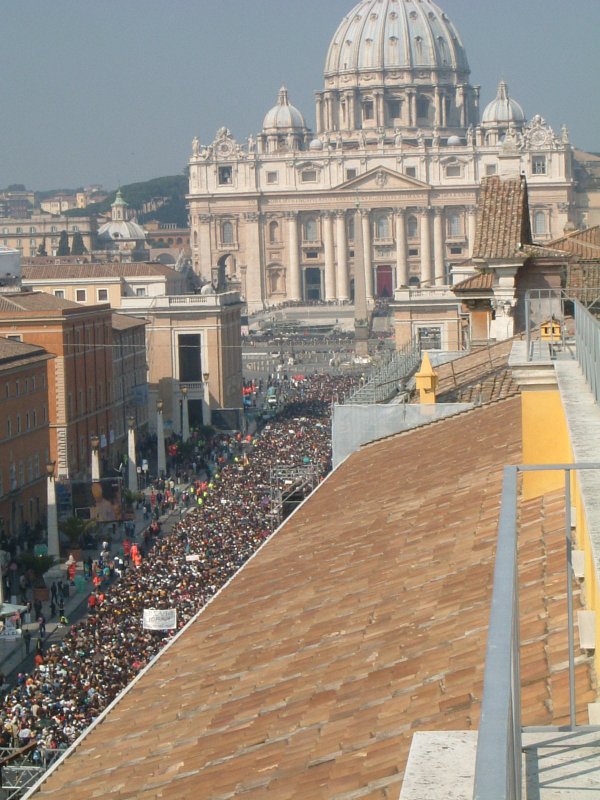
We'll be staying at the Domus Romana Sacerdotalis. It is just off the Via Conciliazione, near Castel Sant' Angelo and therefore quite near St Peter's. The photo below was taken from the roof terrace during the amazing procession of visitors to pay their respects to the late Pope John Paul.
I recommend the Domus Romana to any priest who wants to stay in Rome. The rates are very reasonable, the food (and wine) is wholesome, and there is a tasteful chapel downstairs with four side altars: you can say Mass whenever you want. There are a number of permanent resident priests, mostly working in the Curia, and you can meet some very interesting fellow guests. One time I was sat next to an Argentine Archbishop and a Japanese seminarian from Gricigliano. Another time, I bumped into Cardinal Gabriel Zubeir Wako - a great man who has inspired hope in his persecuted people in the Sudan.


