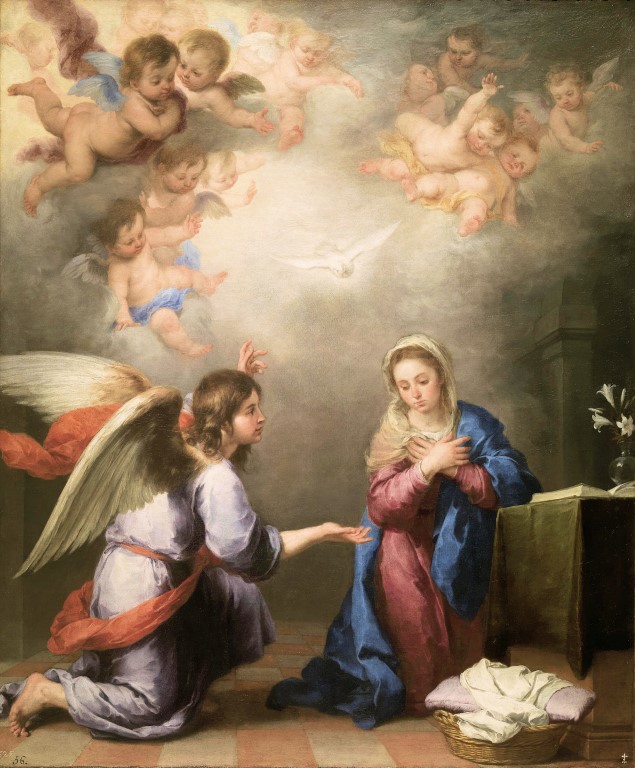
Therefore every scribe who has been trained for the kingdom of heaven is like a householder who brings out of his treasure what is new and what is old.
It was sad to have to pack up and leave Margate this week, saying goodbye to such good people who helped with the worship of God, the care of the poor, the formation of children in the faith, and the stuff like unblocking drains and fixing roofs.
My health deteriorated so much by the early part of this year that I was no longer able to discharge the duties and responsibilities of a parish priest, nor was I likely to be able to do so in the foreseeable future. Archbishop Smith kindly accepted my resignation from the office of parish priest and gave his blessing to my convalescing in Bournemouth where I am being looked after by one of my sisters.
Competent medical care and the good cooking of my sister have helped to improve my health considerably over the past couple of months. The community at the Oratory-in-Formation, the Sacred Heart in central Bournemouth, have been most kind to me, first of all by visiting to bring me Holy Communion at home, and then by making it as easy as possi…
He refers to a Guardian article in which the writer acknowledges that sexual permissiveness is a "a dystopia that gave rise to a rape culture." So far, so obvious, but the recent development which really puzzles the "progressives" is that there is a decrease in sexual activity among young people.
Pecknold hopes that the progressive writers will arrive at the view that sex is sacred, is "an earthly union which cooperates in the divine act of creating immortal beings" and should be reserved to marriage.
Well that would be really good, but I fear that it is optimistic. It is at least possible that we could see our new Manichaeism develop further. The Manichees saw birth as a bad thing because it introduced evil matter into the world. Our …
Quite rightly, we usually think of Our Lady as having care for us, rather than us caring for her. The titles of the Litany of Loreto remind us of many different ways in which she acts as our Mother: she is among other things the refuge of sinners, consoler of the afflicted, and health of the sick.
So how can we talk about our care and responsibility for Mary? Let me first explain where this thought came from. The third saying of Jesus from the Cross is related by St John as follows:
"When Jesus therefore had seen his mother and the disciple standing whom he loved, he saith to his mother: Woman, behold thy son. After that, he saith to the disciple: Behold thy mother. And from that hour, the disciple took her to his own." (Jn 19:26-27)
These verses are part of the gospel for the Mass of Mary the Mother of the Church. St John represents the whole Church, Our Lady is given to him as his mother, and therefore by extension we recognise Our Lady as Mother of the Church. Pope Paul …
On Gaudete and Laetare Sundays, Catholic Internet abounds with photos of rose vestments laid out in sacristies and worn at Mass. Indeed I posted the above image myself on Twitter yesterday ;-) Looking at these pictures prompted me to write something about the fruits of the Mass.
Every Mass is offered for, and benefits, all the living and the dead. This is the will of Christ and the Church, quite independent of the priest who offers the Mass. In addition to these "general fruits," we speak of the "special fruits" gained by those people who assist in offering the Mass.* The most obvious way of assisting is by actually being present at the Mass, and participating devoutly, but it is also possible to assist by providing for the celebration by building the Church, by keeping it maintained, or by providing things for the Mass, such as vessels – or indeed vestments.
The special fruits of the Mass are impetratory, propitiatory, and satisfactory. Impetratory – the Mass is t…
Following on from Michael Davies’ challenge which I quoted yesterday, I would like to support the suggestion made by Fr Hunwicke recently. Father gently suggests that we could learn from the manner in which anglo-Catholics gradually improved the liturgy and he advocates “the gradual, tactful, pastoral introduction of EF elements into the OF Mass?”
The first recommendation, the invariable use of the Roman Canon, is already legitimate. The Institutio Generalis Missalis Romani n.365.a begins:
The first eucharistic prayer, or Roman Canon, which can always be used… [Prex eucharistica prima, seu Canon Romanus, qui semper adhiberi potest…]
The text goes on to detail when the Roman Canon is “more opportunely brought forth” but that does not contradict the basic statement that it can always be used. A priest who never says any of the other Eucharistic Prayers is not disobeying any rubrics.
Fr Hunwicke then suggests the use of the old offertory prayers and goes on to offer some examples of gest…