Wednesday, April 30, 2008

Sandals and Fiddlebacks

A great video from my friends at the Franciscans of the Immaculate:


Here is the info at the YouTube posting:

Formal fiddleback chasubles and modest Franciscan sandals come together in the Extraordinary Form of the Mass (Traditional Latin Mass) at Our Lady of Guadalupe Friary of the Franciscans of the Immaculate. The video is put to beautiful music from the Franciscan Sisters of the Immaculate, our sister order. The music was recorded in Italy and is a fine example of the high quality of their music which, combined with the friars in Italy, are playing a major part in spearheading the reform of liturgical music in Italy.

Londoners - turn out to vote!

In March, I wrote about my meeting with George Hargreaves and A Christian strategy for the London Mayoral election. The election takes place tomorrow so this is a reminder to all you London Catholics (and other Christians) to get out and vote. As the Catechism teaches:

2240. Submission to authority and co-responsibility for the common good make it morally obligatory to pay taxes, to exercise the right to vote, and to defend one’s country
and the second Vatican Council:
All citizens, therefore, should be mindful of the right and also the duty to use their free vote to further the common good. (Gaudium et Spes n.75)
You will have received your booklet with photos of the ballot papers etc. For Mayor, you get a first and a second choice. You should be aware that there is a good Christian pro-life, pro-family candidate, Alan Craig is standing on a joint ticket for the Christian Party and the Christian People's Alliance.

Being realistic, it is unlikely that Alan Craig will be elected as Mayor. But it would be good for him to get a sizeable number of votes. If you feel that it is a straight fight between Ken 'n Boris, you can still vote for whichever of the two you prefer as your second choice without wasting your vote because if your first choice is not in the top two, your second choice vote is used.

In addition, it should also be possible to vote Alan Craig on as a London-wide member of the London Assembly and possibly some Christian party people in a few boroughs. So if you were just getting apathetic about the whole thing and were not going to be bothered with it, you now have a reason to walk down to the local school some time tomorrow and tick the various Christian boxes...

You can read more about the Christian campaign at The Christian Choice; of particular interest to many readers will be the news item ITV & BBC Censor London Mayoral Election Broadcast "in Fear of Radical Islam". Alan Craig also has a blog called Meet Alan Craig.

Blogs added

I have added a number of blogs to the blogroll on the sidebar via bloglines. Let me know if you are in the wrong category - for example if you are a priest or religious or if you consider yourself a British blog. In the latter case, sometimes there is nothing obvious to indicate this. It is worth putting something about yourself in your profile or on the sidebar. You don't have to reveal your identity or tell people what you had for breakfast but a little general information usually helps.

"Let us do the experiment of tradition"

Amid the many blogs that have now appeared on the blogroll is one that perhaps requires and explanatory note: Transalpine Redemptorists at home. The Transalpine Redemptorists have purchased an island in the Orkneys which is called Papa Stronsay and is now the home of the Golgotha Monastery. As you can see from the map, it is a fair walk/swim from Blackfen!


View Larger Map

The Transalpine Redemptorists have worked closely with the Society of St Pius X but are also informally pursuing avenues of discussion with Rome. Fr Michael Mary CSSR and Fr Anthony Mary CSSR have this week published a "Declaration on Relations with Rome" (headed Immaculate Heart of Mary, pray for us!)

There will doubtless be considerable controversy about this declaration within traditionalist circles but I have to say that I found it a moving expression of sincere desire to be in a regular canonical situation. They speak of the problems that have plagued the Church since Vatican II and then say (referring to Summorum Pontificum)

But now we must ask ourselves if a glimmer of light has not begun to show through the clouds of confusion that for many years have darkened the sky of eternal Rome. For we now have a Pontiff, a successor of Peter, ready to allow us to adhere fully to this timeless tradition of the Church and its complete expression in Catholic life without apparent compromise. He seems ready to "let us do the experiment of Tradition" as Archbishop Lefebvre asked so many years ago.
Their blog is not all about relations with Rome - there is much about daily life in the Community at Papa Stronsay. There can be some fairly severe weather up there and one pastime is to go storm walking:

There is also an account of the funeral of Brother Michael Alban FMS, a Marist brother who had moved to Orkney. His requiem Mass was at Stronsay and he was buried on Papa Stronsay. The hearse was drawn the mile or so from the pier by a donkey:

Well I decided to put the blog on the blogroll (cf. also the "Disclaimer (of sorts)" on the sidebar.) I encourage you to pray that there will be a good outcome to their prudent and charitable deliberations without causing any unnecessary division among traditionalists. Besides, I'm just delighted to see that there are traditional Redemptorists following in the footsteps of one of my favourite saints. The picture of St Alphonsus at the top of this post is one that I took from their blog - it is not one I have seen before.

Catholic Family News

Catholic Family is the website for the National Association of Catholic Families. Tim Matthews also operates a news service that gathers together many stories of interest from different sources and also has original content especially related to the family.

Gower Street Mass - follow up

I have just read the combox at Fr Wilson's post on the Mass in the Extraordinary Form at Newman House

Father Wilson has responded with commendable restraint and good humour to the comments, some of which have attacked him personally - it is also obvious that he is well regarded by the students in his care.

So let me repeat - I am sure the students are grateful to Father for making available a celebration of the older form of Mass. I would add my own prayers that it will be something that enriches the life of the chaplaincy as a whole.

Monday, April 28, 2008

Leaked terna?

Tim Walker at the Daily Telegraph has an article about the terna for Westminster which is, according to his source, Archbishop Vincent Nichols, Archbishop Peter Smith and Bishop Arthur Roche. The Mulier Fortis has an interesting observation on this article concerning the claimed source of the leak.

Tim Walker speaks of "my man at Archbishop's House" as his source. Mac suggests that this indicates political manoeuvering: an interesting point.

On reflection, however, I have to say that none of this can possibly be true. The terna for an archiepiscopal appointment is covered by the Pontifical secret. To leak this would incur a latae sententiae excommunication.

Has anyone suddenly come off the Mass rota?

Cui bono?

I have held off commenting on the latest announcement from the Bishops Conference of England and Wales regarding Holydays in the Extraordinary Form because I am not quite sure what is being attempted here.

It seems that if Mass is celebrated on Ascension Thursday Sunday in the older form of the rite, the Sunday after Ascension should be suppressed and the Mass of the Ascension should be celebrated instead. Not the most brilliant idea in liturgical terms but we could cope with that. But the more important question is over celebrations on the actual days. Are we to take it that those people who want to go to a traditional Mass on Corpus Christi despite there no longer being any obligation to do so are to be prevented?

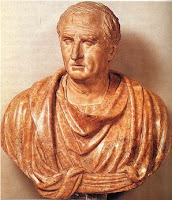
If this is the case, I am reminded of Cicero's question "Cui bono?" - to whom will this be a benefit? What possible good could be achieved by prohibiting people from voluntarily coming to Church to worship God on a feast day hallowed by centuries of tradition?

The text of the response to the dubium has not yet been published so we will have to see what it actually says. I wonder if it is possible to prevent any celebration of a votive Mass of Corpus Christi on 22 May or of All Saints on 1 November; and again, what possible benefit could be achieved by trying to do so?

Damien Thompson has written about this in his post A petty victory for liberal bishops. I expect that one or two people might want to ask Cardinal Hoyos about this when he visits England in June.

Blogs missing from blogroll?

Some time ago, when I went over to bloglines, I changed the blogroll over to update automatically from there.

From time to time, I realise that a blog that I used to have on the blogroll has been inadvertently missed out. Only today, I realised that I did not have Mark's "Rise and Pray" which is an excellent blog.

To be honest, there are no hard and fast criteria. If you write a Catholic blog that is orthodox and you post reasonably regularly - at least once a week is good - I'd be happy to put you on the blogroll.

So here is an invitation. If you think that your blog would go well on the blogroll, let me know in the combox. But do please use the simple html to make a link if you can. (For instructions see "Putting links in the combox"

Sunday, April 27, 2008

Writings of Dominic Barberi and Ignatius Spencer

Br Rupert, in the combox, kindly posted a link to the Writings of Dominic Barberi and Ignatius Spencer. The site carries the text of Fr Spencer's own account of his conversion to the Catholic faith, written at the English College in Rome, in 1831.

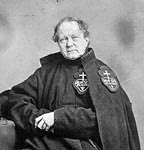
Fr Spencer's cause for canonisation has passed the stage of the local tribunal and the papers are now with the Congregation for the Causes of Saints. Fr Spencer is related to the Princes William and harry through their mother, Princess Diana. In 1840, spencer visited Newman at Oxford. newman refused to meet him for dinner because, at that time, he considered him to be an apostate from the Church of England. (Newman was received into the Church in 1845.)

The writings of Bl Dominic Barberi posted here, his lamentation of England and his Letter to the Professors of the University of Oxford make interesting reading. Many thanks to Br Rupert and his colleagues for posting these items and I pray that they will, as desired, help to promote the causes of these two holy men who loved England.

Saturday, April 26, 2008

Sex education insanity

The Family Bulletin arrived this morning. Published by Family and Youth Concern, this is one newsletter that I always find worth reading. The latest issue is not yet at the FYC website but I expect it will be posted there soon.

A couple of months ago, I wrote about the Government's Sex education review steering group which is hopelessly biased in its make up. an article in the Family Bulletin picks up on something I had missed. Launching the SRE review, the Department for Children, Schools and Families confidently asserted that:

The delivery of good SRE is crucial in keeping young people safe and healthy as well as helping to bring down teenage pregnancy rates.
However, as the Bulletin points out, the Department has admitted that it has neither commissioned nor evaluated research on the impact of SRE on the attitudes and lifestyle choices of young people. Neither has it made any assessment of the effectiveness of sex education. The repeated claim to have a commitment to review best practice in effective SRE seems to be based on little more than asking young people what they want. There is no attempt to find out what is actually "best practice" or what is actually "effective".

Elsewhere in the Bulletin, a contribution by Dr Genuis to a debate in the British Medical Journal is reported. (See: Are condoms the answer to rising rates of non-HIV sexually transmitted infection? No) I was amused by this passage:
In my home province of Alberta, rates of chlamydia and gonorrhoea have tripled since 1998 despite ubiquitous "safer sex" education. The ongoing assertion that condoms are "the" answer to this escalating pandemic reminds me of Einstein’s words, "The definition of insanity is doing the same thing over and over again and expecting different results."
The Family and Youth Concern AGM and Conference with be at the RAF club in Piccadilly on 14 June. Speakers (afternoon) are Irina Tyk, headmistress of Holland House School which set up the Butterfly Project to teach children to read and raise educational standards; and Ray Lewis, a former prison governor who founded the Eastside Young Leaders Academy in Newham. Also at the meeting will be Owen and Eunice Johns who were turned down as foster carers because they were unable to condone homosexual practice.

Hasten the complete conversion of our country

Gillibrand has photos of an ex voto at the Basilica of Our Lady of Victories in Paris. It was set up in memory of Fr Ignatius Spencer who had requested prayers at the shrine for the conversion of England. (See For the total conversion of England!)

Incidentally, I have given the link above to the English language part of the basilica's website. There are more articles and photographs in the French section, including this picture by Charles-André van Loo showing St Augustine confounding the Donatist bishops at Carthage.

Friday, April 25, 2008

Cardinal Trujillo: Pope's homily and Times obituary

On Wednesday, the Holy Father preached at the funeral of Cardinal Lopez Trujillo, the President of the Pontifical Council for the Family. In the course of his sermon (Italian version), he said:

How could we not draw attention at this time, to the zeal and the passion with which he laboured during almost 18 years, carrying out a tireless activity protecting and promoting the family and Christian marriage? How could we not thank him for the courage with which he defended the non-negotiable values of human life?
There was quite a good obituary in the Times which observed:
Despite his unpopularity among some liberal Catholics and the attacks he came under in the media, López Trujillo never wavered in upholding traditional Catholic teaching. He once remarked about the role of the Pontifical Council for the Family: “As the Pope would say, these are decisive battles, and we want to be in the middle of them.”

TLM at Gower Street

The Central Catholic Chaplaincy for the London Universities, at Newman House in Gower Street, is to have a celebration of Mass in the older form of the Roman Rite on Saturday 10 May.

Fr Peter Wilson has written about this at the Newman House blog. Fr Zuhlsdorf has added his own comments and analysis.

I would only add that it does not seem necessary to seek permission from the Ordinary for such a celebration. In the post "If... but not "only if", I pointed out that Summorum Pontificum does not limit permission for the "extraordinary form" to cases where a group of people ask for it - in those cases he must do what he can to facilitate their request. According to his own pastoral judgement, the Pastor may arrange for the not-abrogated and not-forbidden form of the Mass to be celebrated if this form of Mass would be pastorally helpful. If a group of students ask for it, that seems to me a "slam dunk" as the Americans might put it. No?

In any case, I am sure that the students are grateful to Fr Wilson and it is very good to hear that the central London chaplaincy is making the traditional Roman liturgy available to students in their own chaplaincy.

Stones will shout

Stones will shout is the website of Into the Deep, a newsletter from Gippsland in South Eastern Australia. Apparently the voice of the laity is a bit too strong for the diocesan newspaper which has stopped carrying letters to the editor.

Linacre ethics forum next Wednesday

On Wednesday next week (30th April) Dr Mike Delany will be speaking to the Linacre ethics forum on Ethical issues in General Practice.

The meeting will be at 6.30pm (after 5.30 Mass in the Cathedral) in Vaughan House which is behind Westminster Cathedral (map here). The talk itself will be at 7pm, followed by group discussion, questions and answers. (Then on to the cafe/pub!)

Thursday, April 24, 2008

Discussion of mutual enrichment

Fr Thomas Kocik has posted a thoughtful article at NLM on The limits of mutual enrichment. His comments relate particularly to the enrichment of the ordinary form of Mass and his commitment to the reform of the reform makes these especially pertinent.

There are a number of important principles involved. The most important of these, I think, is that the priest should not himself innovate and change the liturgy sponte sua. Here, I think that there is a crucial distinction to be made. On the one hand, priests might make up new elements that have never been part of the Church's liturgy - for example improvisations in the Eucharistic Prayer, saying "Bertha. The body of Christ", clown outfits, balloons etc.

On the other hand - and I believe that this is genuinely a different issue - there is the question of introducing elements that have long been part of the tradition of the Church into the newer form of the Roman rite. Here I think we can look at several different levels.

1. Elements that are perfectly consonant with the new rubrics
For example: how should you bow? Priests saying the Novus Ordo sometimes step back from the altar and make a profound bow a the "In spiritu humilitatis..." There is no direction saying what sort of bow should be made at the "Supplices te rogamus..." In such cases, a priest familiar with the rubrics of the older form could observe them at the new form without there needing to be any dispute. The older form could give direction at these points where there is none in the newer form.

2. Elements that can be introduced without disturbance
The Holy Father's saying of the prayers during the incensation of the altar is a good example. The priest can silently say the prayer "Dirigatur Domine..." without disturbing anyone. Priests with no experience of the older form would not necessarily know these prayers. But many younger priests would be glad to say them quietly.

Other examples would be: the vesting prayers before Mass, the Aufer a nobis on the way to the altar, the Oramus te when kissing the altar, the Placeat tibi during the "pausa" after communion or on the way back to the sacristy. These elements would genuinely enrich the Novus Ordo for many priests. They would also enrich the rite per accidens for the laity because of their contribution to the devotion of the priest.

3. Elements that could be fairly easily allowed
I understand that there was a proposal (defeated in the event) to allow the old offertory prayers to be said (silently, as is the first option in the Novus Ordo) . I can see no cogent reason not to allow these prayers to be said - nor to forbid the additional gestures and genuflections in the Roman Canon - another possibility that has been proposed before. Cardinal Ratzinger in "The Spirit of the Liturgy" suggested the possibility of allowing the Canon to be said silently. This would be a more significant option because of its impact on the laity who are used to hearing the Canon said out loud; but it would not take long for people to become accustomed to this way of saying the Canon.

Fr Kocik referred to the 1978 answer in Notitiae and my observation that this could lead to ridiculous consequences if interpreted strictly. (See: Is your alb back to front?) Surely, as he hints, this approach to the Novus Ordo has now been thoroughly superceded?

The key principle is that enunciated by Pope Benedict in his accompanying letter to Summorum Pontificum:

What earlier generations held as sacred, remains sacred and great for us too, and it cannot be all of a sudden entirely forbidden or even considered harmful.
This principle can provide us with a key to uncovering the riches of tradition in the newer form of the Roman Rite.

Burundi nuncio's residence mortared

Reuter's reports that the residence of the Apostolic Nuncio to Burundi, Archbishop Paul Gallagher, has been damaged in a mortar attack by the rebel "Forces for National Liberation" during the latest outbreak of violence in the small but crucially important nation in the central lakes region of Africa. (See: Burundi rebels bomb capital, hit papal envoy's home)

Fortunately, Archbishop Gallagher was out of the country at the time and nobody was hurt at the residence. It is unlikely that the Archbishop's residence was deliberately targeted. Nevertheless, it must be a worrying time for him. He was ordained for the Liverpool archdiocese and has worked for many years in the Vatican diplomatic service. He moved to Burundi in 2004, replacing Archbishop Michael Courtney who was killed in a roadside ambush. I knew Archbishop Gallagher when I was in Rome as a student and would be very grateful if you could remember him and his mission in your prayers as well as praying for peace in Burundi and the region.

Sri Lanka: priest killed, Our Lady in hiding

Last Sunday, Father M X Karunaratnam, a priest who worked to expose human rights violations in Sri Lanka, was killed by a remote-controlled claymore mine on a road he was known to use regularly, travelling in a well-known and easily recognisable vehicle. (see this story on Tamil.net)

His funeral on Tuesday was an opportunity for thousands of Tamil Catholics to gather to pay their respects to this much-loved priest who provided care and support for people traumatised by the war and the 2004 Tsunami disaster.

In the meantime, earlier this month, the statue of Our Lady of Madhu was moved from the Madhu Church to a safer area, along with the priests, religious and laity who were advised by the local Bishop to relocate because of increasing attacks by the Sri Lankan military. Shortly afterwards, the Church was destroyed by shellfire. The all India Catholic union condemned the attack as a "wanton act of official military violence against a haven of peace"

Madhu is the most important shrine in Sri Lanka for both Tamil and Sinhalese Catholics. The statue of Our Lady was moved there during the 17th century persecution of Catholics in Sri Lanka by Dutch protestants.

The B-Movie Catechism

This fun site B-Movie Catechism combines reviews of B-Movies with thoughtful observations from the Catechism.

H/T The Curt Jester

Wednesday, April 23, 2008

"In the Footsteps of Joseph Ratzinger"

This morning, I received a new book co-published by the Catholic Herald and Family Publications: "In the Footsteps of Joseph Ratzinger" by Alessandra Borghese (translated by Sebastian Cresswell-Turner from the original Sulle Tracce di Joseph Ratzinger.)

The author describes her "pilgrimage to the places most dear and important to the Pope", travelling with her friend Gloria von Thurn und Taxis not long before the Holy Father's visit to Bavaria. Her charming account makes evident her affection for both Bavaria and for Joseph Ratzinger, whom she had known before he became Pope. Throughout the book, there are reminiscences and anecdotes about the Holy Father from her own experience and those of people she spoke to along the way.

We are taken to Munich and Freisung, the abbey of Scheyern, where he often went on retreat, the shrine of Altötting, the towns where he spent his childhood: Marktl am Inn, Tittmoning and Traunstein ("the most beautiful town in the world" in the eyes of the Holy Father). A chapter is dedicated to Regensburg ("A small Rome")

At the end of the book, Borghese describes her experiences of meeting the Holy Father on his visit to Bavaria and offers an epilogue "From Regensburg to Istanbul" discussing the Holy Father's visit to Turkey in the light of the controversy over his lecture at Regensburg.

ISBN: 9781871217810. Price £7.95. Paperback 128 pages. Can be ordered direct from Family Publications or from the Amazon link below

Tuesday, April 22, 2008

Catching up on the Papal visit

Photo by Chris McGrath/Getty Images

I haven't been able to watch much of the Holy Father's visit to the USA and have promised myself some time to catch up with the various video clips that are around. A convenient site for these is the US Bishops Conference Papal Visit Site which has a collection of videos of the various events. The Vatican website has the for the texts of the various homilies and addresses of the Holy Father during the visit.

Of the various addresses that I have read so far, I was particularly moved by his address to young people at the St Joseph Seminary in Yonkers. He gave them all an "A plus" for German pronunciation and went on to use various saints as examples for young people. He spoke of his own youth:

My own years as a teenager were marred by a sinister regime that thought it had all the answers; its influence grew – infiltrating schools and civic bodies, as well as politics and even religion – before it was fully recognized for the monster it was. It banished God and thus became impervious to anything true and good.
He spoke about the sinister darkness brought about by the manipulation of the truth and the misuse of freedom. He offered a concise description of relativism:
And in truth’s place – or better said its absence – an idea has spread which, in giving value to everything indiscriminately, claims to assure freedom and to liberate conscience. This we call relativism. But what purpose has a “freedom” which, in disregarding truth, pursues what is false or wrong?
He challenged the misrepresentation of Christianity so common in the West:
Sometimes we are looked upon as people who speak only of prohibitions. Nothing could be further from the truth! Authentic Christian discipleship is marked by a sense of wonder. We stand before the God we know and love as a friend, the vastness of his creation, and the beauty of our Christian faith.
The New Liturgical Movement has a most interesting observation: How Lovely Are Thy Offertory Prayers. During the incensation of the altar at the various Masses, the Holy Father's lips were moving. There are no prayers prescribed in the Novus Ordo for the incensation of the altar. It is most likely that the Holy Father was saying the traditional verses of Psalm 140:
Dirigatur, Domine, oratio mea sicut incensum in conspectu tuo: elevatio manuum mearum sacrificium vespertinum. Pone, Domine, custodiam ori meo, et ostium circumstantiae labiis meis : ut non declinet cor meum in verba malitiae, ad excusandas excusationes in peccatis.

Let my prayer, O Lord, come like incense before You; the lifting up of my hands, like the evening sacrifice. O Lord, set a watch before my mouth, a guard at the door of my lips. Let not my heart incline to words of malice, to make excuses for sins.
I noticed that he was also moving his lips as he was putting incense into the thurible and blessing it. Again, there is no specified prayer in the Novus Ordo but the traditional prayer is:
Per intercessionem beati Michaelis Archangeli, stantis a dextris altaris incensi, et omnium electorum suorum, incensum istud dignetur Dominus bene dicere, et in odorem suavitatis accipere. Per Christum Dominum nostrum. Amen.

Through the intercession of Blessed Michael the Archangel, standing at the right hand of the altar of incense, and of all His elect may the Lord deign to bless + this incense and to receive it in the odour of sweetness. Through Christ our Lord. Amen.
It could well be that these are examples by which the Holy Father, in a small and unobtrusive way, is putting into practice that "mutual enrichment" between the two forms of the Roman rite for which he expressed a hope in Summorum Pontificum.

Catholic Herald coverage of apostolic visit

The Catholic Herald's page on the Apostolic visit to the USA has plenty of links, pictures, eye witness reports and analysis.

Getting to Blackfen

Sometimes, people get lost when trying to get to the Church in Blackfen. So I have done some work on google maps. There is one map with directions by train and bus:


View Larger Map

and another with directions by car from the M25:


View Larger Map

The "view larger map" link takes you to the full page map on google. You can zoom the maps in to rooftop resolution and you can click on the blue "pins" for particular bits of information.

Monday, April 21, 2008

St George's Day Mass cancelled

I am sorry to say that the High Mass at St Mary Moorfields on Wednesday 23 April (St George's Day) will not now take place because of a visit from one of the Auxiliary Bishops of Westminster. I apologise for the short notice but I was only informed myself this evening.

Sunday, April 20, 2008

Forthcoming sung Masses at Blackfen

This Saturday, our traditional Latin Mass will be sung with Gregorian chant according to the Roman Gradual. The Mass starts at 10.30am and will be followed by Benediction and the Marian anthem. (The Missa Cantata is usually on the first Saturday of the month but it has been brought forward because of the parish first communion Masses.)

We will also be having traditional sung Masses on the feast of the Ascension (1 May) and Corpus Christi (22 May), both at 8pm.

If any clergy are free and would like to assist, they would be very welcome - it would be great to be able to celebrate any of these Masses as a a solemn High Mass. Just let me know in the combox - put "not for publication" if you would prefer the comment to remain confidential. Of course, if you do not feel confident enough to assist as Deacon or Subdeacon and would prefer to assist in choro, you would also be most welcome. Seminarians would also be very welcome to assist in choro or to help with serving Mass.

Directions to Our Lady of the Rosary, Blackfen.

Cardinal Trujillo RIP

Cardinal Lopez Trujillo, the President of the Pontifical Council for the Family, has died in Rome at the age of 72. He was admitted to the Pius XI clinic in March and suffered a heart attack last night after suffering grave health problems for several weeks.

Cardinal Trujillo was a great voice in support of the family and of the right of parents with regard to their children's education. See John Smeaton's post: Cardinal Alfonso Lopez Trujillo, defender of the family and human life, dies.

Saturday, April 19, 2008

Things you see in Rome

I was going to say "only in Rome" but that would run the risk of turning the combox into a version of Private Eye's "Pedants Corner". Enjoy!

A cherub with a papal tiara ...

Police on normal duty looking like actors in a World War II film ...

A lampshade dedicated to Blessed Pope Pius IX ...

Really chic scaffolding covers ...

Heresy-sensitive security cameras ...

An anticlerical revolutionary whose tomb is less attractive than the biscuit named after him ...

Books bought in Rome

There are three bookshops that I always visit in Rome: the Vatican bookshop, Ancora (Via Conciliazione) and Leoniana (Via dei Corridori). I have learnt to leave plenty of room in my suitcase. Here is what I bought this year:

The Bones of St Peter by John Evangelist Walsh. Singa-Tala, Manila 1982
The story of the excavations in 1939 and the identification of the bones of St Peter.

Saints of the Roman Calendar by Enzo Lodi, translated by Jordan Aumann. St Pauls 1992
What is says, basically - following the new calendar. Has a historical note for each saint, followed by a "message and relevance" note drawing on the texts of the liturgy. Needs to be supplemented by "Saints of the English Calendar" for England.

The Fifteen Saturdays by Bartolo Longo. Shrine of Poppeii (1993)
The "Presentation" says that they have updated the style of the text so I am glad to have an English translation rather than an annoyingly modernised Italian original. It also says

"The thoughts, however, though not corresponding to theological ideas of today in several points, we have maintained intact, just as the saintly author conceived them through his sincere personal experience"
so thank goodness for that.

Pray, Pray, Pray. Editrice Shalom (1998)
This was one of a number of beautifully produced paperbacks on sale in the Vatican bookshop. Over 1000 pages of prayers, novenas, chaplets, meditations etc. ordered according to the persons of the Trinity, Our Lady and the Saints. There is a website for Editrice Shalom but although it has a union flag button, it does not take you to an English section. At any rate, they seem to be putting out devotional books in English.

Mother Theresa. Come be my light. The private writings of the "Saint of Calcutta" edited by Brian Kolodiejchuk MC. Doubleday (2007)
I was hoping that this would be simply the words of Bl. Mother Theresa. There are quite a few of those but there is a lot of editorial and explanatory text too. I'll reserve judgement until I have read it this one.

Vademecum di Teologia Morale by Gerardo Cappelluti OP. Libreria Editrice Vaticana. (1995)
A short handbook of moral theology, solidly based on St Thomas.

Roma Sacra. Tha Vatican Grottoes. Libreria Editrice Vaticana. (2003)
Illustrated historical and archeological guide to the grottoes under St Peter's Basilica - which I did not get to visit this time. A beautiful book with lots of colour and monochrome illustrations.

Dominus Est by Bishop Athanasius Schneider. Libreria Editrice Vaticana. (2008)
This was the one I really wanted - I have read it today and will post some thoughts on it later.

One great thing about buying books in Rome is that they are often so reasonably priced. The "Pray Pray Pray" was 12 euros, Bartolo Longo (over 400 pages) was 5.20 euros.

Thursday, April 17, 2008

Papal visit snippets

I have just been catching up on the Papal visit to the USA, reading the speeches and looking at commentaries on the events. The following is just a very brief list of some things that caught my eye.

John Allen posted a transcript of the Holy Father's question and answer session on the plane in which he talked about clerical child abuse among other things. Allen also suggests that the Holy Father is setting the agenda on this one. He has not shirked the issue but gone for it head-on.

Reacting to the Pope's address at the Whitehouse, President Bush said "awesome speech, your Holiness". There has been some fairly strong reaction worldwide to the music at the Mass in Washington DC, especially the Responsorial Psalm.

The Pope has told the American Bishops that Catholics Should Be… Catholics in a speech that Our Sunday Visitor called A bit of a bombshell.

For updated coverage with the all-important links, I recommend Thomas Peters at American Papist. For photos - as ever, just go to the PapaRatzi Forum's page for Foto Immagini & Video Benedetto XVI, go down to "Foto da Papa" and click "last".

Catholics Come Home

A video invitation to lapsed Catholics to "come home" to the Church:

San Lorenzo cloister and paleo-Christian iconography

There used to be an optional course in Rome that everyone seemed to end up taking at one time or another: Fr Martinez-Fazio's course on paleo-Christian iconography. Complete with slides, it gave us an introduction to the many early Christian monuments that we would see on our visits to the catacombs and to other holy sites in Rome - such as San Lorenzo Fuori le Mura.

Here is a whale - recalling the story of Jonah and included on Christian monuments as a symbol of the resurrection:

Here is an image of the feeding of the 5,000 - calling to mind the Eucharist as the pledge of eternal life (Our Lord is second from the left):

On the next fragment there is a dove with an olive branch - a common symbol recalling the end of the flood and indicating Baptism. You can also see the very common Chi-Rho symbol (the first two letters of the Greek word "Christos")

One more: this has a list of virtues attributed to someone who died.

It reads:
FIDES
CASTITAS
VERITAS
PUDICITIA
INTEGRITAS
HAEC OMNIA TULIT SEC[um]

Faith (/faithfulness), chastity, truth, modesty, integrity - he bore all these in himself (or she... herself)

Rather more noble than "he liked a drink and a bet on the horses."

Pio Nono Pilgrimage

Fr Charles Briggs is an expert on 19th century Church history, particularly the life and letters of Mgr Talbot and the life of Blessed Pope Pius IX. One of the main purposes of our trip outside the walls of Rome today was to visit the shrine of Blessed Pope Pius IX. Having duly offered a prayer asking for his intercession, and collected a couple of holy cards, we looked at the rest of the very Roman basilica of San Lorenzo Fuori le Mura. Here is the statue of St Lawrence with his gridiron:

Downstairs there is a piece of marble on which St Lawrence's body lay when it was collected by the Christians after his martyrdom.

The Basilica has a monumental ambo together with a candlestick for the Paschal candle.

This is not the only basilica in Rome that demonstrates visually that the reform of the Liturgy after Vatican II often in practice had little to do with restoring ancient use and a lot to do with dumbing down and the fear of anything beautiful and ancient.

The great ambo and candlestick could be taken as a sign of the importance attached to these elements of the liturgy. However, take a look at this photo of the basilica and see if you can spot anything.

Here is the close-up of the lectern that is actually used to proclaim the Word of God:

and here is the paschal candlestick in use this Eastertide.

Why?

The Campo Verano

The Campo Verano is the principal cemetery for Rome. Many religious congregations and houses have vaults here. On our visit today, Fr Charles and I managed to find the English College vault which I last visited on the occasion of the funeral of Fr Christopher Pemberton who died suddenly at the English College Villa in Palazzola in the summer of 1983. We had just returned from Fano where he was giving a retreat to myself, Fr Frank Marsden and Fr John O'Brien in preparation for our ordination to the Diaconate.

Walking around, we found the vault for the Irish College and I was delighted to find there a monument for Mgr Frank Frayne who used to work for the Pontifical Commission for Migrants and Tourists.

Mgr Frayne was a very kindly man who was generous with his time, taking the trouble to give new students a guided tour of St Peter's. The tour would start with the cherubs at the holy water font:

To illustrate the proportions of the basilica, Mgr Frayne would point out that the cherub's head was the size of four babies' heads. This led to some speculation that this might be used as a unit of measurement for all aspects of the Basilica - the baldacchino, for example, would be 75 babies' heads high.

All very silly, of course. But it was good to remember him today and perhaps you might join me in offering a prayer for the repose of his soul and that of Fr Chris Pemberton.

VEC Church in restauro

Yesterday evening, we were generously welcomed at the Venerable English College in the Via Monserrato. The College is the oldest English institution outside of England which has continuously existed on one site. During the reign of Queen Elizabeth I, it became a missionary college for English priests to return to their homeland; 44 priests of the College were martyred, beginning with St Ralph Sherwin, St Alexander Briant and St Edmund Campion.

The College Church is dedicated to the Holy Trinity and St Thomas of Canterbury. Thanks to a generous benefactor, the decoration of the entire Church is to be cleaned and restored. This major work will take at least a year, possibly two. Together with Mgr Nicholas Hudson, the Rector, I climbed onto the scaffolding so has to have a close look at the ceiling.

In this photo, you can see a small square that has been left uncleaned, showing the contrast:

and here is another photo from up on the scaffolding.

There will be quite a bit of gold leaf used in the restoration work. In Italy, the fine arts commission, known universally as the "Belle Arti" exercise considerable authority over such work. In this case, they spent some time coming to a decision about the exact brightness to be used in the gold leaf.

One of the most important elements of the work will be careful cleaning and restoration of the pictures in the tribune. These give a history of the saints and martyrs of England and Wales. They show some of the martyrs from penal times and depict their sufferings in some detail as an encouragement to their successors. This example shows the torments of some of the Carthusian martyrs:While the works are in progress, Mass is celebrated in the "Martyrs' Chapel". The centrepiece for this chapel is a painting of the martyrdom of St Thomas of Canterbury which has also recently been restored. It is currently hanging in the old "Guardaroba" prior to being re-hung in the Chapel. We also had a chance to see the beautiful third library. Here is an image from our last visit:

Over the years, students have kept a scrapbook of newspaper cuttings. This is now a fascinating and unique historical record, going back to the early 19th century. These books have been re-covered, the older volume retaining the original binding.

Finally, we repaired to the Salone which serves as a common room for the staff and a fine room to receive visitors. I took a photo of the painting of St John Fisher. This confirms my impression that it is similar to the recently re-discovered painting at the John Fisher School which was blessed on the day of the consecration of the school chapel in January. My guess is that one of the priests at the Fisher school, perhaps an alumnus of the English College, knew of the painting there and arranged for a copy to be made. I am sorry that the photo below (of the painting in Rome) is not very good. It does need restoring - if there are any devotees of St John Fisher with some money to spare, it would be welcomed for this purpose.

Talking over old times, the Rector brought out a reminder of my days at the College. There was an old sepia photo of a gita to Tusculum during the 1880s. A group of us went out there to recreate the photo 100 years on.

In this closer picture, you can possibly see myself, Fr Guy Nicholls and Bishop Paul Hendricks if you look carefully!

Photos from the Casa Santa Maria

In the photo above, you can see that the windows of the Papal Apartment are closed and shuttered. While the Holy Father was away in America, Fr Charles and I went to the Casa Santa Maria. Here is a photo of their very fine baroque chapel:

There is a plaque listing the American Bishops who have been consecrated in the chapel itself:

There is a side chapel dedicated to Our Lady of Guadalupe with an image dating back to the 16th century:

The house also has a Byzantine chapel: here you can see the altar and tabernacle:

And finally, a photo of our host, Father Martin Edwards, attempting to imitate Pope Paul VI:

Tuesday, April 15, 2008

Forte's criticism of Blair lecture

There is an interesting article by Pendennis in the Observer: Tony Blair's forte is not thinking says Forte. Rocco Forte, who paid for the lectures, seems to be unimpressed by the former PM's contribution.

'I don't think Blair is a particularly deep thinker,' Forte told me at a reception thrown by Condé Nast Traveller magazine. 'I don't find him a deep man. He was always voting against his Catholic principles; for example, he voted for abortion. He constantly voted against the ideas of Catholicism
As Pendennis observes, Rocco was out of the country for the lecture
"although for a man who travels as much as he does, it would surely not have been out of the question to return."

Visit to the Casa Santa Maria

I am blogging here courtesy of Fr Martin Edwards and his Apple Computer. I have had an excellent lunch, courtesy of the North American College and now have some photographs of their beautiful chapel.

After some hours, the Apple Computer has finally unfrozen and allowed me to post a photograph. Fr Charles is a devotee of Blessed Pope Pius IX and so it was good to stand with him before the magnificent painting of the great man in the refectory.

Monday, April 14, 2008

Catholic Herald Apostolic Journey portal

The Catholic Herald has dedicated an area of it website to coverage of Pope Benedict's Apostolic Visit to the USA. The Herald has been particularly proactive in working together with bloggers and so they would welcome any snippets of information or interest to add to their site.

Credit where credit is due: my first stop for good coverage and links on the Apostolic visit would be Thomas Peters at American Papist. He always does a good job of collecting new stories and keeping regular updates.

Blair's office - non-reply to John Smeaton

When commenting on Tony Blair's recent lecture at Westminster Cathedral, I mentioned the letter that John Smeaton wrote asking the former Prime Minister whether he would repudiate his various anti-life policies in the light of his much publicised reception into the Catholic Church.

John Smeaton has now received a reply in which Blair continues to avoid these questions. Whenever this subject is brought up, various people talk about Blair's "private conscience" etc. In light of the fact that he will not even reply to questions about any of these issues, I wonder whether the penny will finally drop...

Domus Romana

Fr Charles Briggs and I are staying at the Domus Romana Sacerdotalis, a house established by Pope John Paul II in 1999 to accommodate clergy in the Holy See's Diplomatic Corps or those working in the Roman Curia. They also take guests when they have room. Above is a photo of my room - simple but perfectly adequate. The house is just off the Via Conciliazione and so after dinner, we took the short walk down to have a look at St Peter's:

Romam advolamus

Just a quick post from the airport where Fr Charles Briggs and I are enjoying a quick coffee after lunch before boarding our plane for Fiumicino. We stopped off at the seminary at Wonersh last night and left this morning after Mass and my teaching commitment.

We will be staying at the Domus Romana Sacerdotalis until Friday. I have brought cameras, leads, chargers, laptop, mobile modem etc. so I hope to be able to blog uninterruptedly.

Tomorrow we will have an interesting visit to the Casa Santa Maria, the graduate house for the North American College where we will be hosted by Fr Martin Edwards, a fellow diocesan. I am hoping to meet some of the American seminarians. Here is a photo of one seminarian on a visit to Fr Edwards' parish last Christmas. Unfortunately, his face was obscured but perhaps we will get a better photo this time.

Saturday, April 12, 2008

Online Garrigou-Lagrange texts

A correspondent sent me a link to The Three Ages of the Interior Life by Fr Garrigou Lagrange OP. From there, I also found a project which is putting Garrigou-Lagrange's commentaries on St Thomas onto the internet: The Summa and other matters. (This is a work in progress and many of the links do not yet work.)

Cardinal O'Brien on YouTube

Cardinal O'Brien speaking about the Human Fertilisation and Embryology bill:


H/T to John Smeaton, SPUC Director

Faith magazine editor on Fox News

Tomorrow evening, Fox News will be broadcasting a feature about the Holy Father's visit to the USA. I am delighted to see that in the story advertising this, Fr Hugh Mackenzie, editor of Faith Magazine, is quoted. He will be on the Fox News special tomorrow (Sunday) at 8pm and 11pm ET.

Friday, April 11, 2008

Apologia pro BBC sua

Mark Thompson, Director General of the BBC, was speaking at Westminster Cathedral last night on "Faith in the Media." (At the website for the Cardinal's Lectures, there is a transcript of the lecture.)

One of the central points of the lecture was a post-modernist approach to the content of what is broadcast:

Not only do you never know who is going to see, or hear, or read what. More importantly, you can never predict what they’re going to make of it. The same words, the same programmes provoke diametrically opposing reactions in different people. They can mean, they can signify utterly different things.
Hence broadcasting cannot have a direct, on-to-one influence on what people think. Perhaps not at that level and consistency but I would be surprised if this claim was meant to deny that the broadcast media have an influence on public opinion - or indeed to deny that there is any possibility of achieving at least an inter-subjective effect by the way that material is edited. If that were so, the people at the Beeb would have good reason to fear further job cuts

There were some interesting observations about the way that perception of religion has changed over the past twenty years: "the progressive recognition that the long-predicted global recession of religion has not actually materialised." Along with this, there was a repeated insistence that the picture is all very complex and diverse. This may be so but the accusation that you are trying to simplify a complex issue is every current affairs broadcaster's answer to any attempt to clarify a moral or religious issue - whether it is abortion, the historicity of the gospels or the bias of the BBC against the Catholic Church.

This bias was the subject of some of the questions that were asked after the talk. The first answer to this was to express the hope that the BBC had succeeded in being fair and balanced. When pressed further, the post-modernist thesis came into play: people will look at the same piece and have very different reactions.

Both in the lecture and responding to questions, Thompson was quite definite in supporting the showing of "Jerry Springer - The Opera". It was a case of allowing people to make up their own minds; the warnings meant that people could switch off if they were going to be offended; it was a satire about daytime TV, not a satire about Christ; it would be a very "high bar" to set if you said "I am offended by this programme so nobody else can watch it either."

Another questioner asked whether the BBC would consider dramatising the life of the prophet in a similar way to the dramatisation of Christ's Passion broadcast earlier this year (a programme Thompson was particularly enthusiastic about.)

During his lecture, Thompson commented on how the decision to show "Jerry Springer - The Opera" was not a purely academic matter since it can mean that you have to have a security guard outside you home. I suppose I would be oversimplifying a complex issue to point out that you would probably need more than one security guard if the non-satirised figure was from one of the other major world faiths.

What interested me more, though, was the justification given going rather more carefully with Islam. This was to assert that Christianity is more central and accepted in our culture whereas other religions might be more associated with ethnicity. This may well represent some of the current false assumptions at the BBC that have replaced the assumption that religion is all finished and of no interest to anyone.

There is the assumption that there is really not much harm in denigrating things that are central and accepted in our culture. This assumption has certainly been operating since the early 1960s but is it true? Satire certainly can have a part to play in any civilised society but if it is devoid of genuine moral outrage and simply destruction for its own sake, is this still something worthy of a public service broadcaster?

The assumption that the other religions are more associated with ethnicity reminds me of the story of the sergeant from National Service times who announced
"C of E on the right! Holy Romans on the left! All the fancy religions up the middle and go and worship the other Jesus!"
Which particular ethnic group is Islam associated with? or Catholicism? or Buddhism?

Certainly for Mark Thompson and the BBC, under increasing pressure over the bias that has so long existed at the corporation, the prestigious opportunity of presenting an apologia for its impartiality at the Cardinal's Lectures at Westminster Cathedral must have been most welcome. Frankly, it did not convince me to get a television and commit myself to the license fee again; and I am afraid that the news that the BBC is going to do a set of films about the Bible and a History of Christianity did not fill me with the enthusiasm it was obviously meant to. But then perhaps I just react differently to these things.

A few of us met up afterwards. Knowing that the Cardinal pub would be jam-packed, I suggested the glass and steel "ha ha bar" across the road. I am increasingly impressed by this venue, especially the table service upstairs.

Improved embed for Pope's video message

thanks to the hermit without a permit, the full version of the Pope's video message is now on the video sharing site Love to be Catholic. Embedded below:


There is a blog which offers coverage of the Papal visit.

Coffee and friends

Andrew at Unam Sanctam has very kindly invited me to have a cup of coffee with him. This can only be a virtual chinwag at the moment since Malaysia is not near enough to pop over during the morning break. Nevertheless, it is a nice idea and I'd like to invite in turn, from various parts of the globe:

Richard Marsden (Bashing Secularism)
Fr Paul Harrison (Thoughts from Walney Island)
Ma Beck (Ward Wide Web)
J P Sonnen (Orbis Catholicus)
and Puella Paschalis.

Thursday, April 10, 2008

Questions raised over large concelebrations

CNS carries an interview with Mgr Guido Marini, the papal MC. He discusses several aspects of the liturgy as it will be celebrated during the Holy Father's visit to the USA.

One question particularly interested me, that of large concelebrations. This is, apparently, "the subject of ongoing study at the Vatican." Marini said

"there must be a direct relationship, including a visual one, between the words of consecration and the matter that is being consecrated,"
It certainly does seem necessary that the priest should be able to see what he is supposed to be consecrating. He should also be able to say the words of consecration with integrity where "this" is my body, not "that" over there somewhere.

UPDATE: Jeff Miller kindly sent the link to NLM's article where the Holy Father spoke about this issue to the clergy of Rome.

Pope Benedict on YouTube

A short video message from the Holy Father in advance of his forthcoming Apostolic visit to the USA.


At the USCCB website, there is a longer video message. The Vatican website carries the text of the message.

Glasses direct

This packet arrived in the post last week, just a few days after I placed an order at glassesdirect.co.uk. I have now got to the point where I need reading glasses more and more so when I lost a pair somewhere in Helsinki airport, I decided to try out this website by buying the cheapest glasses they had to offer.

You type in the numbers from your prescription on an online form, pay by card and then the glasses come in the post. I am unaware of any shop that can beat a price of £15 for prescription glasses. If you want to pay more, you can get "fashion" frames, bendy glasses, have them coated, tinted or made as bifocals etc. A rather nice touch is that if you post about them you get a £5 off voucher. So that's my declaration of interest!

I realise that this sounds almost like a piece of spam so I will stop there. It is just that many glasses wearers I have spoken to were unaware of this possibility so thought it would be helpful to post about it.

Wednesday, April 09, 2008

Christine Butcher RIP

This morning I preached at the funeral Mass for Christine Butcher. Born in 1926 in what later became East Germany, she lived through both Nazism and Communism before escaping to the West where she met and married Bob who died a few years ago. Christine's son, Paul, runs the business side of Faith Magazine and so I got to know Christine over many years through frequent visits to the family home. She was always eagerly interested in my priestly work and gave me warm and generous encouragement in my priesthood. Please remember her in your prayers.

The Mass was celebrated at the Holy Family Church in Reigate by Fr Dominic O'Hara who has been ordained less than a year. There were eight priests at the funeral: three of us taught Dominic at the seminary. When I realised this, I observed that it might have been a little intimidating to have us all there. So let me say what a pleasure it was to visit the parish, to concelebrate at the funeral and to see how well regarded Fr O'Hara is by the parishioners at Holy Family who obviously appreciate his dedication to the priestly ministry.

Fontgombault video


Vocations Station posted this video clip of Fontgombault which is a promotional clip to advertise a full length DVD. See their post for further information, including where to order the DVD. the video clip is hosted at Love to be Catholic which would be worth a browse.

Praying for priests

Thanks to a correspondent who sent me the link to this site: Praying for Priests.

We are a group of Catholics who pray daily for the priests of the Archdiocese of Glasgow, reciting prayers for our Archbishop, our diocesan priests, and for more vocations.
This initiative follows the example of the Curé d'Ars project in the US diocese of Raleigh, NC. As Mulier Fortis reports, Raleigh diocese also have an "adopt a seminarian" scheme where people pray for one of the seminarians by name every day until his ordination to the priesthood.

These kind prayers are very welcome and they help to remind us as priests of our responsibility to the faithful in the way that we live.

Tuesday, April 08, 2008

Pluscarden Retreat

This today from Dom Augustine. I warmly recommend this retreat at Pluscarden.


Pluscarden Monastic experience retreat 2008
Live the monastic life for six days

The Benedictine monks of Pluscarden Abbey are organising a Monastic Experience Retreat for single Catholic men aged 18-40 to be held at the Abbey on 1st – 6th September 2008. The format will be the same as the successful retreat held last year and those who attend will live the same life as the monks and follow the monastic timetable. They will be in choir with the monks, do some lectio divina (spiritual reading) and prayer as we do, eat in the monastic refectory, do some manual work with the brethren each afternoon etc. There will also be a few talks and discussions on things such as the meaning of monastic life, monastic prayer and the Divine Office, and Gregorian Chant, as well as a tour of the Abbey some periods of recreation and a chance to speak with the brethren.

This is an opportunity for men who are considering a monastic vocation to experience our life ‘on the inside’ as well as for any men in the age group to share the riches of monastic spirituality. Those who came on previous retreats have ended up as monks, seminarians, diocesan priests, members of other religious orders and secular institutes as well as in various other ways of life.

Pluscarden Abbey was founded in 1230. The monastic community died out after the Reformation in 1560 but Benedictine monks from England returned to the medieval buildings in 1948 and resumed the monastic round of prayer and work. Over the years the buildings have been restored and at present the cloister is being completed. The community now consists of 30 monks, some of whom live in a daughter house at Petersham, USA and in a new monastic foundation in Ghana, West Africa. The monks live the classical Benedictine life of prayer and work centred on Holy Mass and the Divine Office celebrated according to the traditional schema of St Benedict, all of which is sung in Latin with Gregorian Chant. For more information on our way of life see the Pluscarden Abbey website

For further information on the retreat, contact Fr Augustine by email or by post at:
Pluscarden Abbey
Elgin
IV30 8UA

Pilgrimage to Compostela

Gareth Thomas is going to walk 1300 miles from Westminster Cathedral to Compostela, starting on 12 May. He hopes to arrive in time for the feast of St James on 25 July.

He is raising money for Whizz-Kidz, a charity for disabled children. He has a blog Whizz-Kidz Pilgrim which will detail his journey and already has some sensible observations about the nature of the pilgrimage. He is also discerning a vocation to the Catholic priesthood so remember him in your prayers. If you have some money that you don't want to be lumbered with in purgatory, do contribute to Whizz-Kidz via his blog.

Blair raising money for Stonewall

LifeSite News, Stonewall and Pink News report that the recent Stonewall Equality dinner on Thursday 3 April raised £320,000, and that £20,000 of this was from the winning auction bid to have tea with Tony Blair.

Tony could not be at the dinner itself on account of his giving the first of the Cardinal's Lectures that evening in Westminster Cathedral.

Sunday, April 06, 2008

St Thomas Aquinas on study

The Northampton Seminarian has posted the advice of St Thomas on how to study. I hope that the exams went well.

The advice of St Thomas is salutary on various levels. My favourite of the bullet points is this one:

Never mind who says what, but commit to memory what is said that is true.

"The Bacon Priest" video

I came across this on the Facebook "Aid to the Church in Need" group. It is a short video from CNA about the life and work of Fr Werenfried Van Straaten, the founder of ACN.

Snowballs after Mass

Looking out of hte window this morning, I saw the Church and surroundings being gradually covered by snow - the soft, flaky sort that settles in snowball-perfect layers. This young fellow managed to get a fairly threatening snowball together quite easily.

And another of my young parishioners decided that it was unfair for Father to be left out of the fun.

Saturday, April 05, 2008

Two lists of good films

After my rant about movies that I detest, Karen at Gem of the Ocean let me know of two lists that she posted last year of favourite movies with religious themes:
Favorite Movies with Religious Themes
and
More Movies with Catholic Appeal

As she says,

The movies often aren't about religion per se, but they have themes and characters that would appeal to most Catholics.

Tony Blair's lecture

On Thursday evening, Tony Blair gave the first in a series of The Cardinal's Lectures at Westminster Cathedral. There is a transcript of the lecture at the Westminster diocesan website and Mgr Langham has posted a report on the lecture with some photos, (including the one to the left.)

John Smeaton has posted on the lecture: Blair in the cathedral and the “universal right to abortion”. He has also written to Tony Blair asking if he will reply to his letter of 11 January in which he asked whether in the light of his reception into the Catholic Church, Blair would now repudiate:

  • voting in 1990 for abortion up to birth three times during Parliamentary debates on what became the Human Fertilisation and Embryology Act 1990;
  • personally endorsing your government’s policy of supplying abortion and birth control drugs and devices to schoolgirls as young as 11 without parental knowledge or consent;
  • your government introducing legislation which has led to a law which allows, and in certain circumstances requires, doctors to starve and dehydrate to death vulnerable patients;
  • your government’s commitment to the promotion of abortion on demand as a universal fundamental human right.
  • personally championing destructive experiments on human embryos.
(See the text of the letter for the various sources.)

Blair is keen that "faith" in general should be respected as a force for "progress." We could ask with Chesterton "progress towards what?" People of faiths should not be exclusive or "extremist", they should be "open" and not "closed." He praises Karen Armstrong's "remarkable" book that talks about the evolution of religious thought from "earliest times" when it was irrational and unforgiving, to "modern times" when faiths share common values and purpose.

Therefore he is setting up a Foundation which will pursue the Millennium Development Goals, and publish information about the different faiths in various media. The Foundation will help those of any faith who stand for peaceful co-existence but "reject the extremist and divisive notion that faiths are in fundamental struggle against each other." It will promote the idea of faith itself as "something dynamic, modern and full of present relevance." Irrelevance is represented by "stark dogmatism and empty ritualism." Whether there can be beautiful dogmas or grace-filled rituals is left unsaid.

Reading the lecture, I was struck by how cogently this globalistic pan-religious niceness ignores the real questions over which people of faith disagree with one another and, more, with the humanists whom Blair seems also to want on board the global faith fest. The questions that he raises have been addressed brilliantly by Cardinal Ratzinger in "Truth and Tolerance" but as far as this lecture is concerned, that book might as well never have been written.

To give an example of how the lecture blithely ignores the practical detail related to the high sounding principles it wafts before us, consider these two passages:
Faith corrects, in a necessary and vital way, the tendency humankind has to relativism. It says there are absolutes – like the inalienable worth and dignity of every human being – that can never be sacrificed.
except in the case of the abortion up to birth of disabled babies?
Faith is a living and growing belief, not stuck in one time in history, but moving with time, with reason, with knowledge, informed by scientific and technological discovery not in antithesis to it, as well as directing those discoveries toward humane ends.
such as destructive research on human embryos?

In the peroration, there is an interesting point which I would like to highlight since I believe that it neatly demonstrates that Blair fails to address a crucial problem for faith in Britain today. He says:
If people of different faiths can co-exist happily, in mutual respect and solidarity, so can our world.
The assumption seems to be that it is people of faith who are the problem. If only people of faith could sink their differences and live in peace, it seems, then all would be find and dandy. In the Britain that has emerged from decades of increasingly secularist government, (not particularly impeded in any way by Tony Blair) the far more disturbing spectre is that of the secularists who are militant, extremist, closed, exclusive etc. (put in the other nasty-denoting words of your choice). The vaunted global mutual respect and solidarity will not survive long in the areas where their writ runs.

Friday, April 04, 2008

The positive via negativa

At Parkminster today, I was continuing with the tract De Deo Uno. We were considering the ways in which we can, in this life, know God. In particular we looked at the Summa Theologica Prima Pars, question 13 on the names of God.

In this section, we considered the various ways in which we can, in this life reach towards the essence of God, even though (in this life) we cannot attain any intuitive vision of the essence of God. There are:

1. The way of affirmation by which we predicate certain attributes of God – that he is good, almighty etc.

2. The way of negation by which all limitations and imperfections are excluded from God. For example, God is not mortal, God is infinite etc. (Some of the Fathers also negated such things as goodness of God because our idea of goodness is limited.)

3. The way of eminence by which we explicitly assert the superabundant divine perfection above anything that the created mind can conceive.

When looking at Lateran IV's condemnation of the Abbot Joachim, I quoted Franzelin:
"The more perfectly we know God, the more perfectly we understand the reason why we cannot in this life comprehend him or understand him as he is in himself. The reason, that is to say, is the infinite perfection of God, as opposed to our finite and imperfect way of knowing. And reversing the order, the more deeply we understand this reason of our relative ignorance, the more truly and deeply we understand the perfection of God."
This is a helpful point, showing that even in the "via negativa" by which the Fathers denied things of God because of the limitations of our human intellect, they were also affirming the perfection of God.

In this connection, one of the students made a very pertinent observation about the place of silence in prayer. This struck me as an important practical point. In our prayers, we can say things to God or about him. These correspond to the way of affirmation and are good and right. We can also remain silent in the presence of God. This corresponds to the way of negation in which we deny any limitation or imperfection in God.

Nevertheless, this silence itself is a positive affirmation of the greatness of God. Our very silence is itself an act of adoration of the one who transcends all the things that He has created. "It is good to wait in silence for the salvation of God" (Lam 3.26)

We are now moving on to the thesis "The created intellect can be raised to the intuitive vision of God" (De Fide). One of the interesting sidelines in this question is the heresy of Gregory Palamas and the Hesychasts who denied that the blessed in heaven have an immediate, intuitive vision of the divine essence and said that instead they had only a vision of some splendour or glory that was distinct from God, yet uncreated. (Yes, that does sound inconsistent, doesn't it?)

Summary of Soho Square talk

Emitte lucem tuam has very kindly posted a short summary of my talk at St Patrick' Soho Square the other day. See: A challenge to the culture.

As I mentioned, the full version will go on the St Patrick' parish website in due course and I will let you know when this happens.

(BTW - I forgot to bring my camera on Wednesday. If anyone did take any photographs of the talk, please email them to the Catholic Herald (editorial@catholicherald.co.uk) marked for the attention of Anna Arco who might be interested.)

Movie meme

Hilary has tagged me for a meme. Let me say that I do not usually do these because it is enough trying to keep up the blog anyway, but looking at this one I immediately felt a rant coming on ...

The meme is: Top-Five Critically-Lauded Movies I Simply Detest

OK so here we go - off the top of my head:

Four Weddings and a Funeral
Nasty denigration of marriage and light-hearted celebration of vicious and cynical adultery. A film that I switched off half way through. I imagine its follow-up "Love Actually" is as bad. I'll not be ordering that one for rental. (As Sir Dan once commented: "Fornication Actually.")

Angela's Ashes
Mis-lit for the big screen. People from Limerick pointed out to me that it actually doesn't rain there every day. In its frenzied desire to attack the Catholic Church, this splenetic celluloid hate-fest manages to insult the Irish generally.

Gangs of New York
What a horrible, stinking, prejudiced portrayal of Catholics with a gratuitously sacrilegious portrayal of Holy Communion! Truly ghastly stuff on every level - can't imagine why I watched this.

Elizabeth
Black legend for the late 20th century. Like there is any basis to suggest that missionary priests murdered those who brought them to England!

The Life of Brian
Yes, I know some of it is funny. That's the point. This film taught generations of youngsters the language of blasphemy. When they string you up for going to Mass, this film will be part of the groundwork.

Glasgow schola website

A few weeks ago I mentioned about the Latin Novus Ordo Mass that is sung every Sunday at 4pm. (Gregorian chant in Glasgow)

There is now a website for the schola. They practice on Wednesday evenings and would welcome new members.

Thursday, April 03, 2008

"Alive and young" Church at Soho Square

Last night, I was giving a talk on "Humanae Vitae - a challenge to the culture" at St Patrick's Soho Square. The parish priest, Fr Alexander Sherbrooke runs a thriving parish in the heart of London with the "School of Evangelisation" putting into practice the call of Pope John Paul for a new evangelisation.

The room was packed with young adults and I was impressed by this example of Pope John Paul's affirmation, repeated by Pope Benedict: "The Church is alive, the Church is young." My talk was one in a theological lecture series running most weeks from the end of February until the middle of June, to commemorate the 40th anniversary of Humanae Vitae.

The parish is going to publish the talks on its website so if you want to see what I said, I'll post a link when the talk is published.

Fr Mildew's thoughts on purgatory

Fr Mildew, my former teacher, has posted some thoughts on purgatory of particular relevance to the priest. These were prompted by a recent trip to the hospital. I found them very salutary.

Today, Father has commented on an "extraordinary letter" in the Tablet. Reading it, I was struck by how vast a gulf there is in understanding between some of the older clergy and the clergy of the John Paul II generation. Priests like Fr Mildew have watched a kaleidescope of theological opinion and liturgical practice spin round since Vatican II and now find themselves shoulder to shoulder with many of the "under 5s". (A term often used for those ordained less than five years.)

Bishop Devine's call to battle against secularism

Many thanks to Gillibrand of Cathcon for the text of Bishop Joseph Devine's Gonzaga lecture at Glasgow. (Saying no to Secularism) The first part of the lecture is a fascinating discussion of sectarianism in Scotland today, looking at historical and cultural questions and offering some surprising observations.

The second half of the lecture is of more general interest in England as well as Scotland. He tackles the question of secularism in principle, emphasising particularly that:

"When liberty and equality are made the supreme values, not truth and goodness, then we have an agenda that is no longer answerable to what is true and what is good."
On specific issues, Bishop Devine drew attention to his opposition to the adoption bill:
It was at this point, when I saw what the legislation entailed, that I went to war against the Scottish Executive. I did this on my own behalf, as I was convinced that the only way ahead was to defeat the primary legislation. I did not have the support of the Bishops as they had been advised by our Parliamentary Officer that the Scottish Executive would find a way to protect our agencies in the adoption field.
His honest and hard-hitting comments offer welcome leadership.

Wednesday, April 02, 2008

"It was enough to see him praying"

Zenit news has an English translation of the homily given by Pope Benedict at the Mass today for the third anniversary of the death of Pope John Paul II. It never fails to impress me that when Pope Benedict speaks about his predecessor, he does so from a genuine admiration and affection. Having worked so closely with Pope John Paul for so long, I think that he is in a better position than most people to appreciate the dedication, motivation and profound spiritual life of Pope John Paul.

It was enough to see him praying: He literally submerged himself in God and it seemed that everything else during those moments was left outside. During the liturgical celebrations, he was attentive to the mystery being carried out, with a keen capacity to perceive the eloquence of God's word in the development of history, penetrating deeply into God's plan. Holy Mass, as he often repeated, was for him the center of the day and all his existence -- the "living and holy" reality of the Eucharist that gave him spiritual energy to guide the people of God on the path of history.

Bowden's "Mementoes of the Martyrs" online

In the combox, Lilo kindly sent a link to a freely downloadable copy of Bowden's "Mementoes of the Martyrs" (at the Internet Archive).

Also online is Bowden's The witness of the saints : or, The saints and the Church

Tuesday, April 01, 2008

And I'm on my way...

All bets are off for me as Archbishop of Westminster. Just before April 1st draws to a close, I have found out that Pope Benedict has other ideas for myself and Fr Zuhlsdorf of the megablog What Does The Prayer Really Say. Apparently, we are to be appointed to the new Sacred Congregation for Internet Evangelisation. See the story from the Cross Reference: News: New dicastery for Catholic bloggers formed.

I can feel a song coming on...

Ode on the appointment of two priest bloggers to the newly-formed Congregatio pro Evangelizatio Interretiali
To the tune of "Me and Julio down by the school yard"

The cardinal prefect rolled out a bed
Heading up a new congregation
When the Papa found out he began to shout

And he issued a communication
It's within the law
It was within the law
What the Papa saw
It was within the law.

The prefect look round and muses aloud
We gotta team to hit dissension
The Papa said, "Sheesh, if I get that priest,
I'm gonna get him give my blog a mention."
Well I'm on my way.
I don't know where I'm going
I'm on my way I'm taking my time
But I don't know where
Goodbye to Brenda queen of the English
See you, me and Z in a
Roman dicastery
See you, me and Z in a Roman dicastery

In a couple of days they come and
Take me away
But the web can’t keep a secret
And when the radical priests
Found the news released
We were dissed in the back of the Tablet

And I'm on my way
I don't know where I'm going
I'm on my way, I'm taking my time
But I don't know where
Goodbye to Brenda queen of the English
See you, me and Z in a
Roman dicastery
See you, me and Z in a Roman dicastery
Singin’ me and Z in a Roman dicastery.

Blackfen Missa Cantata - Saturday

This coming Saturday, the feast of St Vincent Ferrer, there will be a Missa Cantata at Our Lady of the Rosary, Blackfen at 10.30am. This is your chance to hear the hauntingly beautiful Missa Lux et Origo if you have not yet heard it this Eastertide.

At my parish website there is a page giving details of How to Get to Our Lady of the Rosary.

There is information about St Vincent Ferrer in the Catholic Encyclopaedia and at EWTN. I did not know much about St Vincent Ferrer but was inspired to read the following:

“The ordinary subjects of his sermons were sin, death, God's judgments, hell, and eternity. He delivered his discourses with so much energy that he filled the most insensible with terror.”
I shall do my best on Saturday...

Bishops and priests and a bad translation

Fr Sean Finnegan has an excellent post about the theology of the episcopate: Crossword Clue. I would like to make an observation with regard to the rite of ordination of a priest.

The essential form of ordination for priests and deacons is almost exactly the same as the form in the old Roman Pontifical. (The form for Bishops has been changed to be based on the Apostolic Tradition - thought at the time of Vatican II to be by Hippolytus.)

So the Latin text for the form of ordination of a priest is as follows:

Da, quaesumus, omnipotens Pater, his famulis tuis Presbyterii dignitatem; innova in visceribus eorum Spiritum sanctitatis; acceptum a te, Deus, secundi meriti munus obtineant, censuramque morum exemplo suae conversationis insinuent.”
The English translation currently in use is:
Almighty Father, grant to these servants of yours the dignity of the priesthood. Renew within them the Spirit of holiness. As co-workers with the order of bishops may they be faithful to the ministry that they receive from you, Lord God, and be to others a model of right conduct."
But there is no mention of "co-workers with the order of Bishops" in the Latin text. "acceptum a te, Deus secundi meriti munis obtineant" was rendered by J B O'Connell as "that they may obtain the office of second rank received from thee, O God". I wonder myself whether the semi-colon is misplaced (Latin does not really have punctuation of this sort) and whether the "acceptum" might actually refer back to the spirit of holiness (i.e. "having received this [the spirit of holiness] from you, O God, may they obtain the office of second rank". But that is a minor point. The fact is that the translators have gratuitously introduced a disputed theological point without any grounding in the official Latin text.

Trócaire also "not promoting condoms"

Yet another Catholic charity that inadequately protests that it does not promote condoms. I have just received a copy of this article by Herman Kelly, journalist and author of book, Kathy’s Real Story: A culture of false allegations exposed.

Donors have a right to know on Trócaire
Irish Mail on Sunday - March 12, 2007
by Hermann Kelly

When does a Catholic charity become a secularised campaign group? - When it’s name is Trócaire.

The charity group was in the news this week, having been prohibited from running its Lenten ads on commercial radio stations because, regulators say, the ad contained a clearly political end. The ad’s purpose was to highlight the issue of gender equality around the globe.

Of course the selective abortion of millions of female babies across China (with its government enforced one-child policy) is a huge matter of injustice. In Communist China, many innocent children are wiped out before birth; this an issue of gender equality as it’s mostly young girls who are aborted. The selective extermination of females is well-known and yet publicly, Trócaire has been incredibly quiet on this. The question is why?

Trócaire, is the official overseas development agency of the Catholic Church in Ireland and it has done enormously good work in helping those in desperate need in many regions of the globe since it was established by the Irish Bishops’ Conference in 1973.

But after 30 years on the go, Trócaire has clearly ditched any visible sign of Christian motivation to become indistinguishable from other secular overseas development agencies such as GOAL and OXFAM. At least these groups have the good manners to tell their donors that they have no Christian or Church affiliation. Not so for Trócaire.

Trócaire relies on its Catholic name and the bishops’ patronage to gain privileged access to Church sources of funding such as homes, schools and parishes. Yet when asked to financially support pastoral projects such as building churches or supplying religious education books for the very poorest people overseas, Trócaire always says a clear “No”.

A few years ago, Fr Kevin O’Mahony, a White Father priest based in Afar, the poorest and driest part of Ethiopia, approached Trócaire to fund the printing of books on Salvation History for children he was teaching from a small ethnic group in that country. It refused to give him any money for that. Again, during the year 2000 conflict between Ethiopia and Eritrea, Fr O’Mahony’s area had 8 churches and 11 schools destroyed, but he would not get a bean from Trócaire to rebuild these either.

Quite simply, it is a public scandal that Trócaire will refuse funding to Christian missionaries who seek financial help to build a church, or a Catholic school or even to buy Christian religious books.

Trócaire currently demonstrates a radically truncated vision of the human person. Once speaking on the Church’s mission, Pope Paul VI called for “the integral development of humanity”; surely this cannot exclude the religious and spiritual realms of human experience. But, by steadfastly refusing, at every instance, to fund pastoral projects overseas,Trócaire fosters this cut-down view of man. Man cannot live without bread, but as Christ tells us, he cannot live by bread alone either.

Now Trócaire will not help to fund the religious education of the very poorest school children. But the same organisation has absolutely no problems in funding education for other purposes.

A quick glance at Trócaire’s latest annual report shows that in Angola it donated €40,000 for a ‘Programme to provide civic education on the electoral process’. Again, for instance, it gave €38,000 for a ‘Programme of human rights awareness for university students’ in Darfur, as well as funding education in woman’s rights, in children’s rights, on the environment, and on HIV/AIDS elsewhere. In its 2001 report, Trócaire gave money in Uganda for “civic education on tribal customs and culture.” But no funding for education in the Christian faith, and no church building. Trócaire uses the high profile Lenten Campaign to focus on “advocacy & campaigning.” for justice and human rights or other various issues.

It has tapped into a huge wave of generosity from the Irish public, who year after year have shown how much they wish to help others in need. But sharply contrasted with the public’s profound generosity to Trócaire, is Trócaire’s tight-fisted stance in revealing what it does sometimes with this money.

In a December 1, 2003 interview on Newstalk 106, the vice-director of Trócaire, Eamon Meehan said that in their campaign against AIDS: “Many of the partner organisations which we support and assist throughout the developing world would promote, would purchase and distribute condoms.”

When I interviewed Trócaire’s chairman, Bishop John Kirby about this at the time, he confirmed that this was Trócaire policy and was backed by the agency's executive board. However, he said Trócaire was not directly involved in purchasing condoms.

"Trócaire does not fund the purchase of condoms. We do work with organisations which distribute condoms. I have discussed the matter with the executives of Trócaire. This is Trócaire policy."

Trócaire had never revealed this policy of theirs before. Surely the people who give Trócaire money have a right to be made aware that this was their policy. Without getting into a ruck about the morality and effectiveness of condom use against AIDS, the episode raises a huge question mark about the organisation’s accountability and transparency.

When later confronted on RTE radio in March 2004 with the scenario of a posse of priests refusing to collect for it, Trócaire issued the statement: “At present, Trócaire is not funding any agency in Africa or elsewhere which is promoting and distributing condoms.”

So there. It couldn’t be more contradictory could it?

Any other organisation would have got a roasting for this but Trócaire is the like the sacred cow in Irish society which no-one can touch, or even question.

But I have a few questions. What part does faith in God and in Jesus Christ have in Trócaire’s corporate vision? According to its annual:

“Trócaire envisages a just and peaceful world where people’s dignity is ensured and rights are respected;where basic needs are met and resources are shared equitably and in a sustainable manner; where people have control over their own lives and those in power act for the common good.”

Sounds great, but surely any type of development agency could sign up to this. There is nothing distinctly Christian in Trocaire’s vision whatsoever. And because there is not, I cannot see for the life of me, why the organisation should present itself to donors as a Catholic organisation when it wants their money. It would be more honest to either reform or rename. Trocaire must ensure its work is based on Christian charity rather than mere political activism, with its work secularised in its motivation and methods.

Trocaire has at times shown itself either unable or unwilling to stand up for those persecucuted for their Christian faith when its support was expected. For instance, Christians in Pakistan suffer desperate persecuation for their faith, and yet, we hear little of their right for religous freedom from Trócaire. Surely, it is on the ground there and knows what is happening. Its radio silence on this issue, not only in Pakistan but around the world can and should be corrected.

Last August, during the Israeli war with Lebanon, Trocaire organised a rally outside the American Embassy in Ballsbridge and asked as their mainspeakers, Labour Party TD, Michael D Higgins and the homosexual campaigner, Senator David Norris. Neither of whom are noted for a espousal of Chrisitian values in public life. The Labour Party is an anti-Life party which would love nothing more that to get rid of all religious influence on schools, while Senator Norris campaigns to introduce homosexual-civil unions and adoption of children. Perhaps next time, you invite speakers to a platform you provide, check if they can offer anything different from the student standard Marxist mish-mash and the instinctive Anti-American rhetoric of the Labour Party.

Trocaire has done fantastic work in providing for suffering people across the world but the organisation is confronted everyday with the choice to be either PC or RC. Whichever it choses, donors have a right to know where it stands and be able to judge where to put their money in the future.

"Go, the Mass is ended"

One of my favourite passages from Mementoes of the Martyrs:

Polydore Plasden, born in London and "a very virtuous and godly priest" was a fellow student with Bd Edmund Gennings at Rheims and was captured with him at Bd Swithun Well's house. Gennings was celebrating Mass when Topcliffe and his men appeared on the scene. The laymen present, "arising from their devotions, thought proper to oppose force to force so as to prevent the profanation of the sacred mysteries; and one of them, seeing Mr Topcliffe obstinately bent upon coming in, ran upon him to thrust him down stairs, and in the struggle fell with him. In the meantime, Mr Plasden, having appointed the rest to keep the broken door, went to the altar and bid Mr Gennings to go forward and finish the Mass. Then, seeing Mr Topcliffe hastening up with a broken head, to pacify him told him that he should come in presently, and they would they all give themselves up. This they did as soon as Mass was ended."
St Edmund Gennings, St Polydore Plasden and St Swithun Wells are all among the 40 martys canonised by Pope Paul VI in 1970.

The full title of the book is "Mementoes of the Martys and Confessors of England and Wales for every day in the year" by Henry Sebastian Bowden of the Oratory, edited and revised by Donald Attwater (Burns and Oates 1961). This is a real gem of a book so if you see one, snap it up. Perhaps one of the good new traditionalist publishers might consider a new edition. This deserves to be leather bound and gold blocked as the original was.

Cardinal Cordes to lecture at Maryvale

Next week, Maryvale Institute will be hosting a lecture on Pope Benedict's encyclical Deus Caritas Est by His Eminence Paul Josef Cardinal Cordes, the President of the Pontifical Council Cor Unum. (Cardinal Cordes was created cardinal at the consistory in November. The photo shows him last summer visiting his native Paderborn.) The lecture will look at the most appropriate and concrete ways of following the guidelines of the Holy Father’s meditation on love.

The objectives of the Pontifical Council Cor Unum are:

  • To assist the Pope and be his instrument for carrying out special initiatives in the field of humanitarian actions when disasters occur, or in the field of integral human promotion;
  • To foster the catechesis of Charity and encourage the faithful to give a concrete witness to evangelical charity;
  • To encourage and coordinate the initiatives of Catholic Organizations through the exchange of information and by promoting fraternal cooperation in favour of integral human development.
The lecture will be next Tuesday 8th April at 2.30pm. Light refreshments will be available from 1pm and after the lecture.

If you would like to attend, you are asked to reserve seates in advance. Contact Maryvale, referring to “Cardinal Cordes’ Lecture”:

Maryvale Institute
Maryvale House
Old Oscott Hill
Birmingham
B44 9AG

0121 360 8118
enquiries@maryvale.ac.uk