Therefore every scribe who has been trained for the kingdom of heaven is like a householder who brings out of his treasure what is new and what is old.
Sensus Traditionis
A kind reader alerted me to the Sensus Traditionis website run by a priest of the FSSP who is also a psychologist. There is a good collection of mp3 files in addition to various helpful online texts.
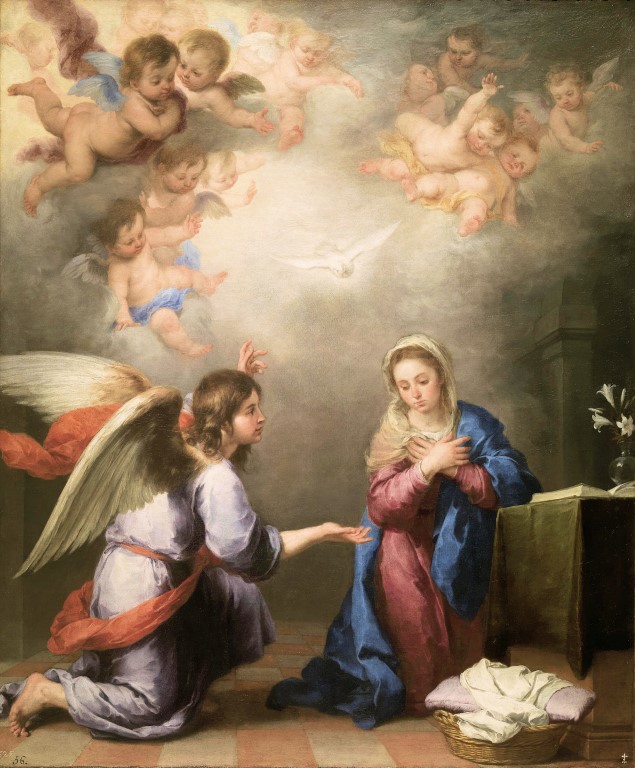
The angels call for our veneration and awe as part of God’s creation. Part of the destructive modernism of the 1970s included advice to Catholic school teachers that they should not talk to children about angels. This wrought lasting damage which continues to need rectifying. We should include in our prayers a heartfelt recourse to our own Guardian Angels. The Archangel Gabriel “God is my strength” would be terrifying were he to appear to any of us. Our Lady was “troubled” at the word of Saint Gabriel and wondered at the manner of the salutation. Immediately, according to his mission, the awesome messenger explained himself. Modern retelling of the event is often reduced to the jejune “Mary said Yes to God”. In fact, she said “Behold the handmaid of the Lord; be it done to me according to thy word”. This conveys more accurately the flawless faith and trust of the Immaculata. In the infinitely wise providence of the Father, we now know the structure of the event in even more detai...
Fr Z has initiated a roaring discussion by asking the simple question whether maniples can be used in the Novus Ordo Mass. ( What Does The Prayer Really Say?: Maniples ) One commenter has referred to an important source for the question that has proved popular among modern liturgists. An answer in Notitiae of 1978 said: "When the rubrics of the Missal of Paul VI say nothing or say little on particulars in some places, it is not to be inferred that the former rite should be observed. Therefore, the multiple and complex gestures for incensation as prescribed in the former Missal are not to be resumed." This is, of course, a strange answer. Saying that it must not be inferred that a rite should be used does not imply that it must not be used. We need to check the Latin of this text. (If anyone with access to a library can check it, I have seen the reference given elsewhere as Notitiae 14 (1978) 301-302, no. 2) Let us in any case take the more restrictive interpretation, bel...
The Conventual Mass at St Hugh's is at 8.15am during the week. Afterwards, I followed the custom of celebrating a private Mass as the Carthusian priests do every day. More about that later. After this and thanksgiving, the first period of manual work or study begins at 10.30am. At 11.15am, the monks say the office of Sext and then lunch arrives delivered by trolley around the cloister and placed into the hatch of each cell. Here is the lunch as it is delivered. The can on top is fresh milk. There are three trays with food in, a fruit basket and your preference of drink: The meal is taken at a shelf in the window recess, called the Refectorium . There is a personal tablecloth, a metal knife and a wooden fork and spoon to eat it with. To drink, there is a choice of fruit juice or Parkminster's home-made apple wine. It sometimes gets called cider but apple wine is probably a safer name because it is 10% abv. It is quite dry and decepively strong. I had this for the first two days ...
The Church Music Association of America and Jeffrey Tucker of the New Liturgical Movement have made available the 1962 Missal online in pdf format (72Mb). The file is hosted at Musica Sacra , the website of the CMAA, thanks to a generous gift from Fr Robert Skeris While you are at it, take a look at the articles clarifying the rules for music at Low Mass and music at High Mass .
The Great Cloister of St Hugh's, Parkminster is the largest in the world. The photograph below shows part of two sides of the Great Cloister with the cells attached: The next photo shows the door to the cell I was given. Each cell has a text on the door: mine was "Where your treasure is, there will your heart be also". To the right of the door is the hatch where the brothers leave food and any other items such as toiletries, light bulbs etc. that have been requested. Inside is a spacious ambulacrum with windows onto the enclosed garden. There is thus room for the monk to take exercise if the weather prevents him from walking in the garden. The stairs go up to the main living quarters and down to the work area and garden. To the left of the cell door, you can see the inside door of the hatch. Here is a view of the ambulacrum from the stairs: Upstairs, the first room in the main part of the cell is called the Ave Maria . The custom is to kneel down and say a Hail Mary every...