Therefore every scribe who has been trained for the kingdom of heaven is like a householder who brings out of his treasure what is new and what is old.
My cat post for today
A mummified cat. This is to be found in the Beaney House of Art and Knowledge in Canterbury which displays items from some of the first professional archaeologists to excavate in Egypt.
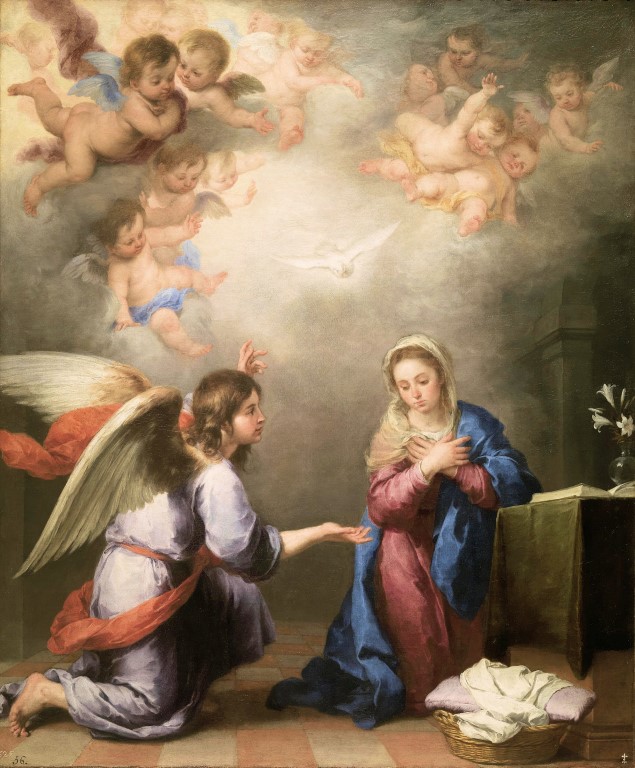
The angels call for our veneration and awe as part of God’s creation. Part of the destructive modernism of the 1970s included advice to Catholic school teachers that they should not talk to children about angels. This wrought lasting damage which continues to need rectifying. We should include in our prayers a heartfelt recourse to our own Guardian Angels. The Archangel Gabriel “God is my strength” would be terrifying were he to appear to any of us. Our Lady was “troubled” at the word of Saint Gabriel and wondered at the manner of the salutation. Immediately, according to his mission, the awesome messenger explained himself. Modern retelling of the event is often reduced to the jejune “Mary said Yes to God”. In fact, she said “Behold the handmaid of the Lord; be it done to me according to thy word”. This conveys more accurately the flawless faith and trust of the Immaculata. In the infinitely wise providence of the Father, we now know the structure of the event in even more detai...
Dilexit Prior in Letters from a Young Catholic asked some useful questions today about indulgences. I thought it would be best to do a post here especially to cover the controversial question of detachment from venial sin. But first the other questions: The conditions for gaining a plenary indulgence Pope Paul VI set down a number of norms relating to indulgences at the end of Indulgentiarum Doctrina . Norm 7 states: To acquire a plenary indulgence it is necessary to perform the work to which the indulgence is attached and to fulfil three conditions: sacramental confession, Eucharistic Communion and prayer for the intentions of the Supreme Pontiff. It is further required that all attachment to sin, even to venial sin, be absent. If this disposition is in any way less than complete, or if the prescribed three conditions are not fulfilled, the indulgence will be only partial, except for the provisions contained in n.11 for those who are “impeded.” It is worth reading the other norms bec...
The Church Music Association of America and Jeffrey Tucker of the New Liturgical Movement have made available the 1962 Missal online in pdf format (72Mb). The file is hosted at Musica Sacra , the website of the CMAA, thanks to a generous gift from Fr Robert Skeris While you are at it, take a look at the articles clarifying the rules for music at Low Mass and music at High Mass .
The Conventual Mass at St Hugh's is at 8.15am during the week. Afterwards, I followed the custom of celebrating a private Mass as the Carthusian priests do every day. More about that later. After this and thanksgiving, the first period of manual work or study begins at 10.30am. At 11.15am, the monks say the office of Sext and then lunch arrives delivered by trolley around the cloister and placed into the hatch of each cell. Here is the lunch as it is delivered. The can on top is fresh milk. There are three trays with food in, a fruit basket and your preference of drink: The meal is taken at a shelf in the window recess, called the Refectorium . There is a personal tablecloth, a metal knife and a wooden fork and spoon to eat it with. To drink, there is a choice of fruit juice or Parkminster's home-made apple wine. It sometimes gets called cider but apple wine is probably a safer name because it is 10% abv. It is quite dry and decepively strong. I had this for the first two days ...
Simon Caldwell recently published an inspiring account of elderly Iraqi Christians in the village of Karamless. (See: Elderly Iraqi Christians defy terrorists, flee to camp H/T Transalpine Redemptorists ) When the IS terrorists overran Karamless, on the night of 6-7 August, everyone fled except the elderly who were too weak to run. The masked terrorists demanded that they convert or be killed by the sword. All of the elderly people said "we prefer to be killed rather than convert." In the event they were ordered to leave the village with only the clothes they were wearing. This moving and inspiring story of courageous witness to Christ is redolent of the days of ancient Rome. Those who refused to deny their faith yet were not actually martyred yet were called "confessors" because of their stout confession of the faith. Penitents could go to them and ask for a note to say that the confessors had prayed for them; this note or " libellus pacis " could...